Archive

May 2026

Browsing

Major League Baseball owners made their long-expected salary cap proposal to the players’ association on Thursday, a system the union has vowed never to accept, setting the sides on course for a confrontation that threatens the 2027 season and perhaps beyond.

Baseball owners hadn’t proposed a firm cap since 1994. Their effort prompted a 7 1/2-month strike that forced the cancellation of the World Series for the first time in 90 years.

MLB’s proposal would cap spending in 2027 at $245.3 million, using figures for luxury tax payrolls that include benefits and the pre-arbitration bonus pool, and establish a payroll floor of $171.2 million. The Los Angeles Dodgers, baseball’s biggest spenders, had a $415.2 million payroll on opening day this year — around $170 million over the proposed cap.

Owners said they would discuss a phase-in schedule that would give teams like the Dodgers time to comply with the cap and an escrow system with the union as part of a proposed seven-year deal, that all current contracts would remain guaranteed and there would be no prohibition of guaranteed contracts under the cap system.

MLB said it would centralize local media revenue from the 30 teams equally and give players a 50-50 split as part of a proposal that would eliminate the current revenue-sharing plan among the clubs.

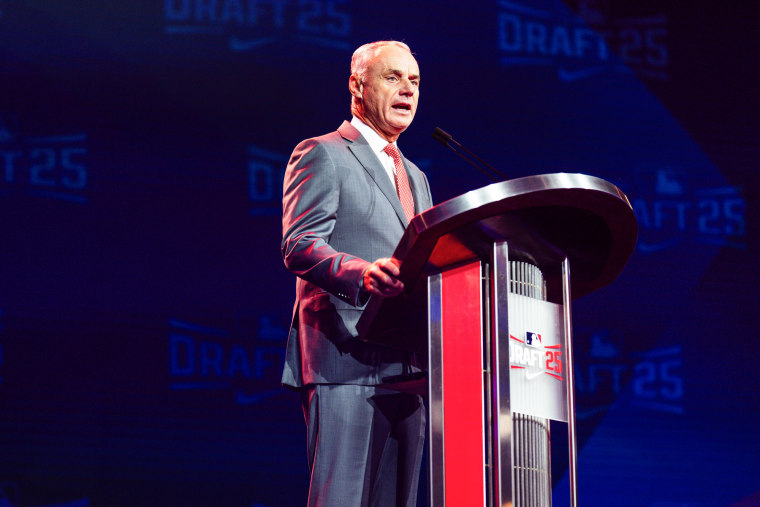
Major League Baseball Commissioner Rob Manfred.Matthew Grimes Jr. / Atlanta Braves via Getty Images file

“Our salary cap and floor proposal levels the playing field while sharing baseball revenue with the players 50/50 as we grow the game together,” MLB spokesman Glen Caplin said in a statement. “Further, by sharing media revenue equally as part of our proposal, we can address another top fan concern of local TV blackouts.”

Baseball’s current five-year deal, agreed to in March 2022 after a 99-day lockout, expires Dec. 2. While a lockout next winter is expected, talks are not likely to intensify until late February or early March 2027, when the possibilities of losing regular-season games and revenue near. If regular-season games are lost, negotiations may become a standoff of which side can tolerate the most economic loss.

Based on 2026 opening day figures, eight teams would have to cut payroll to get under the cap. The teams over are the two-time reigning World Series champion Dodgers, New York Mets ($379.2 million), New York Yankees ($339.6 million), Toronto ($319.5 million), Philadelphia ($315.2 million), Boston ($263.7 million), San Diego ($260.1 million) and Atlanta ($247.9 million).

Twelve teams would be required to increase payroll by a total of $617 million based on 2026 numbers: Miami ($81.8 million), Cleveland ($95.7 million), Tampa Bay ($108.2 million), the Chicago White Sox ($108.6 million), St. Louis ($114.4 million), Washington ($119.1 million), Pittsburgh ($122.6 million), Minnesota ($125.6 million), Milwaukee ($130.9 million), the Athletics ($139.2 million), Colorado ($142.2 million) and Cincinnati ($148.8 million).

Owners and the union agreed to a luxury tax in 2003 designed to slow spending, but teams feel it has had little or no impact on the Dodgers and Mets in recent years. The last small-market MLB club to win a World Series was Kansas City in 2015, although Cleveland, Tampa Bay and Milwaukee all lead their divisions as of Thursday, while the Mets and Red Sox are in last place.

MLB said its revenue has grown by 247% since 2003 and player payroll has increased by 149% in that span.

Management gave the union its latest plan during a bargaining session at the commissioner’s office, one day after the union made its economic proposal. Owners say a cap is needed to improve competitive balance and restrain wealthy teams from assembling starrier rosters than their smaller-market brethren.

Players want expanded free agency and salary arbitration rights along with almost doubling the major league minimum, increasing the money high-revenue teams share with the less-wealthy clubs and establishing penalties for teams that drop below payroll floors.

Aaron Judge of the U.S. leads teammates onto the field before game against Venezuela in the World Series of Baseball in Miami on March 17.Megan Briggs / Getty Images file

Other U.S. major sports leagues operate under a cap. The NBA had a cap in its initial season in 1946-47, then dropped that and began its modern version in 1984-85. NFL players and owners adopted a cap for the 1994 season, and the NHL did so in 2005-06 after a lockout wiped out the entire 2004-05 season.

The Dodgers shattered MLB’s spending record with a combined $515 million in payroll and luxury tax last year en route to their second straight World Series title. Los Angeles’ total was seven times the $68.7 million payroll of the Marlins, the lowest-spending team, and more than the payrolls of the bottom six clubs combined.

Players say a cap would hurt them and enrich owners, and they say they will never agree to one. Without a cap, MLB stars have landed lucrative, guaranteed contracts that outpace what the biggest stars in other U.S. sports leagues make. Juan Soto’s $765 million, 15-year contract with the Mets is believed to be the biggest ever in team sports and is far greater than the largest deals in the NFL (Patrick Mahomes at $450 million over 10 years) and NBA (Jayson Tatum at $314 million over five years).

MLB’s last salary cap proposal in 1994 offered players a 50-50 split of revenue in a system that would have forced teams to maintain payrolls of 84%-110% of the average. Salary arbitration would have been eliminated and the threshold for free agency would have been lowered from six years’ major league service to four — with the provision that a player’s former club could match any offer until he had six years.

MLB’s offer came on June 14 that year, and players struck on Aug. 12. MLB withdrew the cap proposal the following Feb. 6 after pressure by the National Labor Relations Board. The strike ended on March 31 after U.S. District Judge Sonia Sotomayor — now a Supreme Court justice — issued an injunction restoring the work rules of the expired labor contract. Two days later, owners accepted the union’s offer to return to work without an agreement. A deal wasn’t reached until 1997.
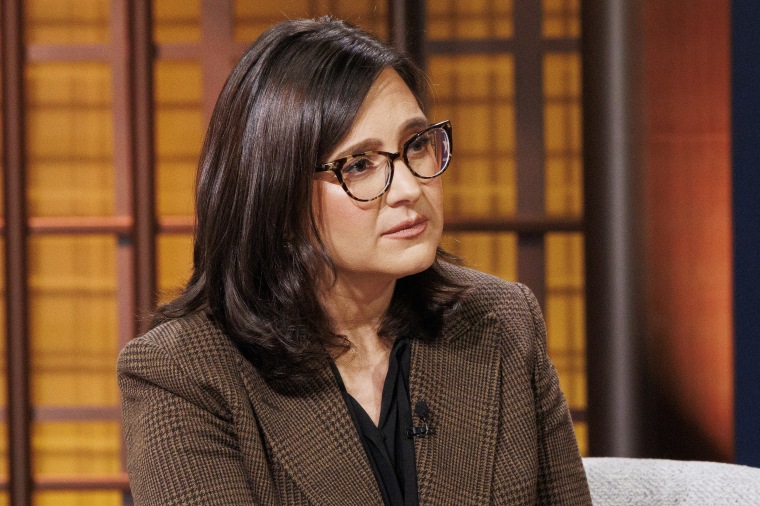

CBS News editor-in-chief Bari Weiss on Thursday replaced Tanya Simon, the executive producer of the network’s flagship newsmagazine “60 Minutes,” with a technology journalist who has never worked in television news.

Nick Bilton, a documentarian and former New York Times technology columnist, will take over for Simon when the show returns for a 59th season in the fall, CBS News leaders announced.

The moves are part of Weiss’ sweeping shake-up of the storied program, created by the legendary producer Don Hewitt.

CBS News has also cut ties with “60 Minutes” correspondent Cecilia Vega, who joined the show in 2023, according to a source familiar with the matter.

Sharyn Alfonsi, another “60 Minutes” correspondent, told the Times this week that CBS News had not renewed her contract. CBS News and Alfonsi did not respond to multiple requests for comment on the status of her deal.

Alfonsi clashed with Weiss late last year over the last-minute postponement of her segment about the Trump administration deporting Venezuelan men to a notorious prison in El Salvador.

Alfonsi said the delay was “not an editorial decision” but a “political one.” Weiss said she held the story “because it was not ready.” It ultimately aired in January.

Weiss — who also had no TV news experience when she was hired last fall — said in a statement that Bilton was “one of the most entrepreneurial journalists of our time and the perfect leader for one of the most entrepreneurial news brands of all time.”

Bari Weiss, CBS News’ editor-in-chief.Michele Crowe / CBS via Getty Images file

“We have huge ambition for ‘60 Minutes’ to reach new heights through deep, revelatory journalism that breaks news, exposes wrongdoing, widens public understanding and forces accountability from every institution and every center of power,” Weiss added.

In a letter to “60 Minutes” staff Thursday, Bilton introduced himself and said in part: “I’m here to lead this show, not preserve it under glass. That means honoring what works and being honest about what doesn’t. I have a notebook full of ideas.”

“Some are about the show itself. Some are about the next generation of correspondents. Some are about the strange fact that we produce one extraordinary hour for one night a week in a world that consumes content around the clock,” he added.

In a statement shared with NBC News, Simon acknowledged that “leadership has decided it is time for a new chapter.”

“I want to be unequivocally clear about one thing: it has been an immense privilege to lead this broadcast, and I could not be prouder of what we have built, fought for, and delivered together over the last year,” Simon added.

“60 Minutes” has faced intense criticism from President Donald Trump, who sued CBS before the 2024 election over an interview with former Vice President Kamala Harris that he claimed had been deceptively edited. CBS vehemently denied that claim. Paramount eventually settled the suit for $16 million.

Bilton’s reporting has appeared in the Times and Vanity Fair. In recent years, Bilton produced documentaries about business and technology for Netflix and HBO, including a film about disgraced Theranos founder Elizabeth Holmes.

Weiss is a former opinion writer and editor at the Times who launched the website The Free Press in 2021. Paramount Skydance, which owns CBS, acquired The Free Press when it hired her.

She has overseen a wave of big-picture changes at CBS News since she was hired in October, including tapping Tony Dokoupil as anchor of “CBS Evening News.”

The departures of Vega and Alfonsi came after CNN primetime anchor Anderson Cooper announced he was leaving the series following a 20-year run as a correspondent.

In a farewell message this month, Cooper said in part: “The independence of ‘60 Minutes’ has been critical, and I think the trust it has with viewers is critical to the success of ‘60 Minutes.’”

Thermos is recalling 8.2 million containers after consumers suffered laceration injuries — and in some cases reported permanent vision loss — when stoppers forcefully ejected from the products and struck them in the face.

The recall covers approximately 5.8 million Stainless King Food Jars and 2.3 million Sportsman Food & Beverage Bottles. According to a recall notice posted by the U.S. Consumer Product Safety Commission on April 30, consumers should stop using the affected products immediately.

The affected models include Thermos Sportsman Food & Beverage Bottles: all units, model SK3010; Food Jars and Food & Beverage Bottles: all units, models SK3000 (16-ounce), SK3020 (24-ounce), and SK3010 (40-ounce); and Thermos Stainless King Food Jars manufactured before July 2023: models SK3000 and SK3020.

The model number can be found at the bottom of the item.

The hazard stems from a design flaw in the stopper — the component that retains heat and prevents leakage. If perishable food or beverages are stored for an extended period, pressure can build up and cause the stopper to forcefully eject when the container is opened. Unlike safer designs, the stopper on the recalled models lacks a pressure-relief valve.

Thermos said it has received 27 reports of consumers being struck by an ejected stopper, including injuries requiring medical attention. Three consumers reported suffering permanent vision loss after being struck in the eye.

The recalled products were sold between March 2008 and July 2024 at Walmart, Target, and Amazon, as well as on Thermos.com. They were available in a variety of colors and bear the Thermos trademark on the side.

Owners of SK3000 and SK3020 Food Jars should dispose of the stopper and submit a photo of the disposal to Thermos. Owners of SK3010 bottles should return the product using a prepaid shipping label provided by the company. For details on returns and replacements, visit the Thermos recall page at Thermos.com.

Roughly 36,000 Heartwarming Hugs Bears, a stuffed animal manufactured by Build-A-Bear, are being recalled due to a zipper detaching from the bear’s pouch.

On Thursday, the U.S. Consumer Product Safety Commission announced that the stuffed animals pose a serious risk of injury or death, as the detached zipper can present a choking hazard.

The recall number is 034464. The recall number can be found on the product label located on the back of one of the bear’s legs.

The bear includes a stuffed heart that fits inside a pocket. The heart-shaped insert is filled with 2.5 pounds of ceramic beads and can be used as a heating pad or chilled for cooling comfort.

“The product is graded 3 years+ and carries a cautionary statement advising adult supervision due to the heated/cooled element,” the release stated.

The bear was sold between January 2026 and March 2026 for about $48.

Customers are advised to immediately stop using the Heartwarming Hugs Bear. Consumers who purchased the bear should return it to the nearest Build-A-Bear store or request a shipping label at www.buildabear.com/recalls. Once returned, Build-A-Bear will issue a refund to the original form of payment or provide a gift card.

There have been no reported injuries, although one consumer in the United Kingdom reported the zipper detaching.

For information on the recall visit Build-A-Bear online at www.buildabear.com/recalls according to the release.

Market watchers looking for clarity about the direction of Big Tech and the AI investment boom didn’t get much Wednesday afternoon amid a barrage of key earning reports.

Instead, four leading tech companies reported quarterly results that beat Wall Street’s official forecasts but nevertheless fell short of the sky-high expectations investors have set for companies leading the AI revolution.

Investors were most enthusiastic about the results of Google parent Alphabet, whose shares climbed as much as 6% in after-hours trading. The company reported earnings and revenue that beat analysts’ expectations and raised its estimate of how much it would spend on AI infrastructure.

Earnings for Facebook parent Meta were greeted with less fervor. Its shares fell more than 5% after it said it expected revenue growth to stay flat in the second quarter.

Amazon’s and Microsoft’s results and forecasts were more mixed. Investors ultimately sent both lower by about 3%.

The major U.S. stock indexes are sitting near all-time highs despite war with Iran, rising oil prices and dismal consumer sentiment readings.

But overall business investment and consumer spending levels remain resilient — and companies on the S&P 500, the index considered the best proxy for overall stock market performance, are reporting the highest average net profit margins in more than 15 years, according to the analytics group FactSet.

That performance is being led by tech companies known as “The Magnificent 7” — Apple, Microsoft, Alphabet, Amazon, Meta, Nvidia and Tesla, which dictate about one-third of the S&P 500’s average performance.

Tech’s leadership has created a double-edged sword for the market writ large: When times are good in tech, the market tends to rise. When tech’s performance is rockier, the market can sink.

“Stocks are again trading at record highs, reflecting strong investor confidence, but the S&P 500’s heavy concentration in the Mag 7 technology leaders elevates downside risk should earnings fall short, as valuations leave little margin for error,” Chris Brigati, chief investment officer at SWBC, a Texas-based financial group with more than $1 billion in assets under management, said in a note to clients this week.

Investors remain focused on the companies’ projections for future spending levels on the technology and infrastructure underlying their AI programs — and how they square with revenue, Brigati said.

“Each company faces its own dynamics, but delivering tangible results from elevated [capital expenditures] remains the critical test,” he said.

Until the end of March, Mag 7 companies’ performance had been caught in the downdraft that hit the broader market as the war with Iran took hold. Many had already spent much of the second half of 2025 treading water as concerns about the timeline for earnings from AI investments, plus seemingly circular financing arrangements, took hold.

But sometime in early April, investors began to realize that the most important names had been trading at discounts relative to projected earnings, according to Ed Yardeni, an economist and president of Yardeni Research, a widely respected market consultancy.

“I think the perception that there might be an exit ramp for Trump with the war with Iran and ceasefire got investors looking at markets again, and what they suddenly realized is the overall market, and specifically the Mag 7, were a lot cheaper,” Yardeni told NBC News.

In recent days, the market has lost some momentum amid signals that President Donald Trump is planning for a more prolonged conflict. A Wall Street Journal report that ChatGPT maker OpenAI may be on track to miss key revenue and user targets has also slowed tech’s recent momentum. OpenAI investments in — and from — other major tech companies have left it deeply intertwined in the AI boom, and some investors fear any weakness could ripple through parts of the AI ecosystem.

OpenAI called the Journal report “clickbait.”

The actual severity of any shortcomings at OpenAI and how far any weaknesses could spread remain open questions, Yardeni said. For now, cautious investor optimism remains the prevailing sentiment and will most likely continue to power markets higher.

“Concerns about some of the uncertainties, like if these companies are spending too much or if they’ll ever get a proper rate of return, that seems to have gone by the wayside,” he said.

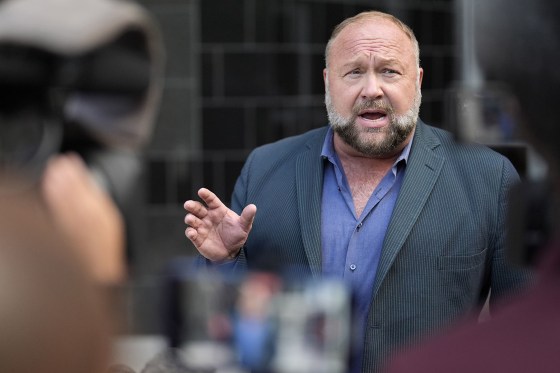
AUSTIN, Texas — The Onion’s plan to take over the Infowars platforms that Alex Jones built into a bullhorn of conspiracy theories and turn them into parody sites was in limbo again Thursday, after a Texas court paused a proposed deal involving the satirical news outlet.

Austin-based Infowars is facing liquidation because of the more than $1 billion in defamation lawsuit judgments Jones owes relatives of victims of the 2012 Sandy Hook Elementary School shooting for calling the Connecticut massacre a hoax. The proposed licensing deal would give The Onion temporary authority to use Infowars’ trademarks, copyrights and intellectual property while a state receiver in Texas works toward liquidation.

A state judge in Austin had scheduled a hearing Thursday on whether to approve The Onion deal with the receiver. But the proceeding fizzled into a status conference because the Texas Third Court of Appeals late Wednesday approved an emergency motion by Jones’ lawyers that temporarily blocked the transfer of any Infowars assets. The judge set another hearing for May 28.

Lawyers for the Sandy Hook families had asked the Texas Supreme Court to overturn the appeals court ruling, but the high court did not issue a decision before Thursday’s hearing.

“This newly insane, unprecedented legal stalling does nothing but delay our deal with the receiver to take control of InfoWars,” Ben Collins, The Onion’s CEO, said in a social media post ahead of the hearing. “We now expect new traps in Alex Jones’ amoral war to deny paying the Sandy Hook families, but we’re freshly surprised by the U.S. legal system’s appetite to put up with it.”

The Onion already has been selling Infowars merchandise on its own website, including T-shirts and tote bags with an Infowars logo that replaces the “o” with its trademark onion image. It wants to turn the Infowars platforms into comedy sites that would include spoofing Jones, conspiracy theories and right-wing talking points, while giving revenue to the Sandy Hook victims’ relatives.

Jones declared victory in videos posted on his social media sites after the appellate court ruling. He called The Onion’s plan illegal, citing pending appeals and his continuing personal bankruptcy case.

“I said days ago there’s no way the Third Circuit Court of Appeals in Texas doesn’t overturn this — you know they’re all Democrats — because it’s so outrageous what you’ve done,” Jones said.

After Thursday’s hearing, Mark Bankston, a lawyer for some of the Sandy Hook victims’ relatives, accused Jones of delaying the liquidation of Infowars numerous times with court filings.

“As far as the world is concerned, Infowars is dead. Everybody knows that,” he said. “He’s trying to keep the bloated corpse of a media organization alive. It’s all a joke. Everybody knows where this is going.”

It’s not the first time The Onion has hit a legal setback in plans to take over Infowars.

In November 2024, the Chicago-based satirical outlet was named the winner of a bankruptcy court auction of the assets of Infowars’ parent company, Free Speech Systems, aimed at helping pay some of the defamation judgments. But a federal judge overturned the auction results, citing problems with process and The Onion’s bid.

Jones said on his show this week that he has a new studio nearing completion. He already has set up a new phone app and websites, including one that sells the dietary supplements, clothing and other merchandise he hawks on his shows. And his personal X account, where he posts videos of his shows and has 4.5 million followers, is not affected by any of the court cases.

On Thursday night, Jones toasted to his crew and viewers during a livestream on X as a clock ticked down to when he said his final moments in the building would hit.

“We’re not here anymore because they’re turning the power off at midnight,” he said.