
Archive

December 2025

Browsing

Trump Media & Technology will merge with a fusion power company in an all-stock deal that the companies said Thursday is valued at more than $6 billion.

Devin Nunes, the Republican congressman who resigned in 2021 to become the CEO of Trump Media, will be co-CEO of the new company with TAE Technologies CEO Michl Binderbauer.

Shares of Trump Media & Technology, the parent company of President Donald Trump’s Truth Social media platform, have tumbled 70% this year but jumped 20% before the opening bell Thursday.

TAE is a private company and the merger with Trump Media would create one of the first publicly traded nuclear fusion companies.

“We’re taking a big step forward toward a revolutionary technology that will cement America’s global energy dominance for generations,” Nunes said in a prepared statement.

TAE focuses on nuclear fusion, a technology that combines two light atomic nuclei to form a single heavier one. It releases enormous amount of energy, a process that occurs on the sun and other stars, according to the United Nation’s International Atomic Energy Agency.

TAE and Trump Media shareholders will each own approximately 50% of the combined company.

The companies say the transaction values each TAE common stock at $53.89 per share.

At closing, Trump Media & Technology Group will be the holding company for Truth Social and TAE, along with its subsidiaries TAE Power Solutions and TAE Life Sciences.

This post appeared first on NBC NEWS

Nevada Sunrise Metals Corporation (TSXV: NEV,OTC:NVSGF) (OTC Pink: NVSGF) (‘Nevada Sunrise’ or the ‘Company’) announced today that it has granted a total of 3,250,000 stock options to directors, officers and consultants of the Company, exercisable at a price of $0.05 per share for a period of five years from the date of grant. The stock options have been granted in accordance with the Company’s stock option plan.

About Nevada Sunrise

Nevada Sunrise is a junior mineral exploration company with a strong technical team based in Vancouver, BC, Canada, that holds interests in gold, copper and lithium exploration projects located in the State of Nevada, USA.

Nevada Sunrise holds the right to purchase a 100% interest in the Griffon Gold Mine Project, located approximately 50 kilometers (33 miles) southwest of Ely, NV.

Nevada Sunrise holds the right to earn a 100% interest in the Coronado Copper Project, located approximately 48 kilometers (30 miles) southeast of Winnemucca, NV.

Nevada Sunrise owns 100% interests in the Gemini West, Jackson Wash and Badlands lithium projects, all of which are located in the Lida Valley in Esmeralda County, NV.

As a complement to its exploration projects in Esmeralda County, the Company owns Nevada Water Right Permit 86863, also located in the Lida Valley basin, near Lida, NV.

For Further Information Contact:
Warren Stanyer, President and Chief Executive Officer
email: warrenstanyer@nevadasunrise.ca
Telephone: (604) 428-8028
Website: www.nevadasunrise.ca

FORWARD-LOOKING STATEMENTS

This release may contain forward‐looking statements. Forward-looking statements are statements that are not historical facts and are generally, but not always, identified by the words ‘expects’, ‘plans’, ‘anticipates’, ‘believes’, ‘intends’, ‘estimates’, ‘projects’, ‘potential’ and similar expressions, or that events or conditions ‘will’, ‘would’, ‘may’, ‘could’ or ‘should’ occur and include disclosure of anticipated exploration activities. Although the Company believes the expectations expressed in such forward‐looking statements are based on reasonable assumptions, such statements are not guarantees of future performance and actual results may differ materially from those in forward looking statements. Forward‐looking statements are based on the beliefs, estimates and opinions of the Company’s management on the date such statements were made. The Company expressly disclaims any intention or obligation to update or revise any forward‐looking statements whether as a result of new information, future events or otherwise.

Such factors include, among others, risks related to future plans for the Company’s Nevada mineral properties; reliance on technical information provided by third parties on any of our exploration properties; changes in mineral project parameters as plans continue to be refined; current economic conditions; future prices of commodities; possible variations in grade or metallurgical recovery rates; failure of equipment or processes to operate as anticipated; the failure of contracted parties to perform; labor disputes and other risks of the mining industry; delays due to pandemic; delays due to weather; delays in obtaining governmental approvals, financing or in the completion of exploration, as well as those factors discussed in the section entitled ‘Risk Factors’ in the Company’s Management Discussion and Analysis for the Nine Months ending June 30, 2025, which is available under Company’s SEDAR+ profile at www.sedarplus.ca.

Although Nevada Sunrise has attempted to identify important factors that could cause actual actions, events or results to differ materially from those described in forward-looking information, there may be other factors that cause actions, events or results not to be as anticipated, estimated or intended. There can be no assurance that such information will prove to be accurate as actual results and future events could differ materially from those anticipated in such statements. Nevada Sunrise disclaims any intention or obligation to update or revise any forward-looking information, whether as a result of new information, future events or otherwise. Accordingly, readers should not place undue reliance on forward-looking information.

Neither TSX Venture Exchange nor its Regulation Services Provider (as that term is defined in the policies of TSX Venture Exchange) accepts responsibility for the adequacy or accuracy of this release.

To view the source version of this press release, please visit https://www.newsfilecorp.com/release/278754

News Provided by Newsfile via QuoteMedia

This post appeared first on investingnews.com

As the world races to meet rising power demand driven by artificial intelligence and advanced computing, cleantech is stepping into a new era of opportunity.

Developing and scaling innovative energy technologies has never been more accessible or cost-efficient, thanks to breakthroughs in AI-driven design, automation and data analytics that are speeding up everything from materials science to grid optimization.

While US climate finance leadership appears uncertain, Canada is emerging as a strong contender for global influence, backed by supportive policy frameworks, abundant natural resources and a deep bench of innovation-focused companies.

Here’s a look at the best-performing Canadian cleantech stocks on the TSX 2025 by year-to-date gains. CSE-listed companies were considered, but none made the list at this time.

Data for this article was gathered on December 16, 2025, using TradingView’s stock screener. Only companies with market capitalizations greater than C$50 million were considered.

1. Anaergia (TSX:ANRG)

Year-to-date gain: 187.23 percent
Market cap: C$472.75 million
Share price: C$2.70

Anaergia is a global company that specializes in converting waste, including wastewater and agricultural and municipal solid waste, into renewable energy, clean water and organic fertilizer.

The company has operations in 17 countries spanning North America, Africa, Asia and Europe. In 2025, Anaergia has expanded its global reach through partnerships with companies in Italy and Spain, as well as through a partnership agreement to build a biogas facility in South Korea.

In July 2024, Anaergia closed the third tranche of a C$40.8 million investment deal with Marny Investissement that gave Marny a controlling interest of about 60 percent in Anaergia, supporting the company’s pivot to employ a greater focus on technology sales and operations and maintenance contracts.

The company’s September investor presentation highlights its new strategy of streamlined operations, expanding through global partnerships and selective Build-Own-Operate delivery.

In its Q3 2025 results, the company reported strong financials, with revenue increasing 77 percent year-over-year to C$51.4 million, gross margins expanding to 28.8 percent and adjusted earnings before interest, taxes, depreciation and amortization (EBITDA) of C$2.6 million.

2. Tantalus Systems (TSX:GRID)

Year-to-date gain: 150.53 percent
Market cap: C$250.03 million
Share price: C$4.76

Tantalus Systems provides technology that gives utilities greater control and insight into their electric grids.

This includes advanced metering infrastructure (AMI), load management systems and grid analytics, all of which contribute to a more efficient and reliable power grid.

One of its key products, TRUConnect AMI, provides real-time data on energy consumption and grid conditions. The TRUFlex Load+DER Management system helps manage energy demand and integrate distributed energy resources like solar power, while TRUGrid Automation optimizes grid operations and improves response to events like power failures.

On July 7, Tantalus announced that it was extending its partnership with EPB in Chattanooga, Tennessee, to deploy 20,000 TRUSense Ethernet Gateways over the next five years, integrating with EPB’s fiber network to enhance grid modernization and operational efficiency.

The company’s annual recurring revenue has grown at an approximate compound annual growth rate of 18 percent since 2016, according to its October presentation.

Its Q3 revenue hit C$14.2 million, up 22.5 percent year-over-year, driven by growth of 30 percent in connected devices and 10 percent in software and services. Its adjusted EBITDA doubled year-over-year to C$1.2 million.

3. Ballard Power Systems (TSX:BLDP)

Year-to-date gain: 50.21 percent
Market cap: C$1.09 billion
Share price: C$3.65

Ballard Power Systems is a hydrogen fuel cell technology company that develops, manufactures and sells proton exchange membrane (PEM) fuel cell products that convert hydrogen into clean electricity with zero emissions. The company targets heavy-duty applications like buses, trucks, trains, marine vessels and stationary power.

Recent deals include a December memorandum of understanding with Kolon Industries for fuel cell components and market expansion and a May multi-year agreement for 50 fuel cell engines with Egypt’s MCV to power its intercity buses.

In Q3 2025, Ballard’s revenue surged 120 percent year-over-year to C$32.5 million led by bus and rail deliveries, with gross margins improving to 15 percent and cash reserves at C$525.7 million. The company also cut total operating expenses by 36 percent.

4. Algonquin Power & Utilities (TSX:AQN)

Year-to-date gain: 32.29 percent
Market cap: C$613 billion
Share price: C$8.48

Algonquin Power & Utilities operates regulated electric, water, wastewater and natural gas utilities across the US, Canada, Bermuda and Chile, alongside a retained Hydro Group after divesting its larger renewables business as part of its pure-play regulated utility pivot.

The company completed the sale of its renewable energy assets, excluding hydro, to LS Power in January 2025 for approximately US$2.5 billion. The company declared a Q4 2025 dividend of US$0.065 per common share.

5. Brookfield Renewable Partners (TSX:BEP.UN)

Year-to-date gain: 15.41 percent
Market cap: C$11.41 billion
Share price: C$38.27

Brookfield Renewable Partners owns and operates a global portfolio of hydroelectric, wind, solar and energy storage assets. It also offers sustainable solutions such as nuclear services and carbon capture. The company’s strategy emphasizes long-term power purchase agreements and asset recycling.

Major 2025 deals include a hydropower framework with Brookfield Asset Management (TSX:BAM,NYSE:BAM) and Alphabet (NASDAQ:GOOGL) for up to 3 gigawatts of hydroelectricity capacity, starting with US$3 billion in contracts for 670 megawatts capacity in Pennsylvania.

Securities Disclosure: I, Meagen Seatter, hold direct investment interest in one or more companies mentioned in this article.

This post appeared first on investingnews.com

The uranium market moved through 2025 with less drama than the previous year, but the quieter tone masked a sector still tightening beneath the surface.

After 2024’s surge to two-decade highs, in 2025, U3O8 prices traded in a narrower US$20 range in 2025, slipping to a low of US$63.71 in March before climbing back toward the mid-US$80s by late September.

In December, spot prices had settled near US$75, a level that has acted as a floor since late summer.

Despite the muted price action, uranium’s underlying drivers strengthened. Long-term demand projections, renewed government backing for nuclear power and rising concerns over supply security all helped support the market.

Investor appetite also played a defining role. Continued buying from the Sprott Physical Uranium Trust (SPUT) (TSX:U.U,OTCQX:SRUUF) and retail investors added steady pressure to the spot market, absorbing millions of pounds of material and lifting prices above where utility demand alone would have placed them.

While true supply shortages did not materialize in 2025, production interruptions and operational uncertainties at major mines made sellers more cautious and prompted utilities to top up inventories more aggressively. The result was a market that remained fundamentally tight, while uranium equities continued to outperform on the strength of a durable, long-term bull thesis.

Against this backdrop, we profile the five best-performing Canadian uranium stocks by share price performance below.

All data was obtained on December 15, 2025, using TradingView’s stock screener. Uranium companies on the TSX, TSXV and CSE with market caps above C$10 million at that time were considered. Read on to learn about the top Canadian uranium stocks in 2025, including what factors have been moving their share prices.

1. North Shore Uranium (TSXV:NSU)

Year-to-date gain: 637.5 percent
Market cap: C$22.17 million
Share price: C$0.295

North Shore Uranium is an exploration company focused on advancing uranium assets in established North American districts. Its core projects include the Falcon and West Bear properties along the eastern margin of Saskatchewan’s Athabasca Basin in Canada, complemented by a growing presence in the Grants uranium district of New Mexico, US.

The company is also evaluating additional exploration opportunities in the United States and Canada as it builds a diversified uranium project portfolio.

In June, North Shore penned a binding term sheet to acquire an up to 87.5 percent interest in the Rio Puerco uranium project in Northwest New Mexico from Resurrection Mining. The project hosts a historical inferred mineral resource estimate, released in 2009, of approximately 11.4 million pounds of U3O8 from 6 million metric tons of ore grading 0.09 percent U3O8 equivalent.

Subsequently, on August 28, the company officially entered into a definitive option agreement for the acquisition and closed a C$1.4 million private placement. On September 11, the company announced it staked 27 additional mining claims at the Rio Puerco project, bolstering its holdings in the area to 64 adjoining Bureau of Land Management claims.

As for its projects in Canada, in an October press release North Shore announced the completion of a prospecting program at its Falcon property, during which crews evaluated 18 priority targets for surface expression and anomalous radioactivity, collecting samples to support further exploration.

Later in the month, North Shore fulfilled its final earn-in requirement at the West Bear property, issuing C$50,000 shares to Gem Oil to secure the right to acquire a 75 percent interest in the project.

Shares of North Shore Uranium rose to a year-to-date high of C$0.29 on December 15, a few days after the company launched a C$3 million private placement on December 11.

Looking ahead, the company is planning a drill program at the Rio Puerco uranium project during H1 2026.

2. Energy Fuels (TSX:EFR)

Year-to-date gain: 156.12 percent
Market cap: C$4.76 billion
Share price: C$19.26

US-based uranium producer Energy Fuels has a large portfolio of conventional and in-situ recovery (ISR) projects across the Western US, including Pinyon Plain in Arizona, a top national producer.

Additionally, Energy Fuels owns and operates the White Mesa mill, the only fully licensed and operating conventional uranium mill in the US. The company is progressing heavy rare earth oxide processing at the plant as well.

Company shares reached a year-to-date high of C$36.84 on October 14, 11 days after Energy Fuels closed its US$700 million offering of 0.75 percent convertible senior notes due 2031, which was upsized after initial purchasers exercised their option to purchase a further US$100 million in notes.

In a Q3 report released on November 3, the company underscored a rise in uranium sales, as its low-cost US production continued to outperform, putting the miner on track to exceed its 2025 guidance.

The firm also advanced its rare earth ambitions, producing 29 kilograms of dysprosium oxide in pilot runs through September, with terbium oxide next in line.

The October US$700 million convertible note offering strengthened the balance sheet, lifting working capital to nearly US$1 billion and raising the effective conversion price to US$30.70 per share.

3. Stallion Uranium (TSXV:STUD)

Year-to-date gain: 150 percent
Market cap: C$49.57 million
Share price: C$0.375

Uranium junior Stallion Uranium holds a 2,870 square kilometer land package on the western side of the Athabasca Basin, in Saskatchewan, Canada, including a joint venture with Atha Energy (TSXV:SASK,OTCQB:SASKF) for the largest contiguous project in the region. The company’s primary focus is the Coyote target at the Moonlite project.

Stallion’s share price shot upward on July 8 after the company announced a technology data acquisition agreement for Matchstick TI, an intelligent geological target identification platform with 77 percent accuracy. Stallion plans to use the technology to enhance its exploration efforts. It closed the acquisition on November 12.

In early September, Stallion Uranium closed the final tranche of a non-brokered private placement, raising gross proceeds of C$10.49 million. The financing included 22.3 million non-flow-through units and 30.1 million flow-through units, both priced at $0.20 per unit.

Stallion’s shares registered a year-to-date high of C$0.51 on September 16.

According to an October statement, Stallion planned to start a high-resolution ground time domain electromagnetic survey on Coyote on November 1, but it has not yet released a further update on the survey.

The company announced a further private placement on December 12, this one consisting of flow-through shares for gross proceeds of C$4.55 million at a price of C$0.45 per share.

4. District Metals (TSXV:DMX)

Year-to-date gains: 139.51 percent
Market cap: C$165.24 million
Share price: C$0.97

District Metals is an energy metals and polymetallic explorer and developer with a portfolio of seven assets in Sweden, including four uranium projects: Viken, Ardnasvarre, Sågtjärn and Nianfors. Currently, District is focused on its Viken uranium-vanadium project, which it says hosts the world’s largest undeveloped uranium deposit.

Shares began trending upwards in mid-May following news of a fully subscribed C$6 million private placement.

District spent 2025 advancing its four uranium projects through a series of targeted surveys. A helicopter-borne mobile magnetotellurics (MobileMT) program wrapped up at the flagship Viken property in June, followed by drone-based radiometric and magnetic surveys at Ardnasvarre, Sågtjärn and Nianfors in July.

Early September results at Sågtjärn and Nianfors were strong enough for the company to seek expanded licenses. Later that month, new MobileMT data from Viken revealed large low-resistivity anomalies both within and beyond the known deposit footprint, pointing to potential for additional uranium deposits.

Shares of District rallied to a year-to-date high of C$1.53 on October 15, the day the company released the results of its radiometric and magnetic survey at the Ardnasvarre property, which identified strong and large anomalies associated with uranium polymetallic occurrences.

District also reported fresh momentum at its alum shale properties after completing airborne MobileMT surveys across the Österkälen, Tåsjö and Malgomaj licenses this summer.

The first batch of results, released in late October, outlined a significant new geophysical anomaly at its wholly owned Österkälen license. District has already applied for an adjacent mineral license to capture the anomaly’s northwestern extension. The Österkälen area lies roughly 100 kilometers northeast of the company’s flagship Viken property.

In subsequent announcements, District reported the discovery of high priority targets at the Tåsjö alum shale property, and of large, robust targets at the Malgomaj alum shale property, both of which led the company to file applications for adjacent mineral licenses.

In early November, District Metals welcomed a landmark decision in Sweden when Parliament voted to repeal the country’s 2018 moratorium on uranium exploration and mining.

The new legislation, set to take effect January 1, 2026, opens the door for renewed development in a nation that holds roughly 27 percent of Europe’s known uranium resources.

5. Purepoint Uranium (TSXV:PTU)

Year-to-date gain: 113.64 percent
Market cap: C$38.01 million
Share price: C$0.47

Exploration company Purepoint Uranium has an extensive uranium portfolio including six joint ventures and five wholly owned projects, all located in Saskatchewan’s Athabasca Basin.

In January, Purepoint strengthened its relationship with IsoEnergy (TSX:ISO,NYSEAMERICAN:ISOU) when the latter exercised its put option under the framework of a previously announced joint-venture agreement, transferring 10 percent of its stake to Purepoint in exchange for 4 million shares. The now 50/50 joint venture will explore 10 uranium projects across 98,000 hectares in the Athabasca Basin, including the Dorado project.

As for Q3, the company closed the final tranche of a C$6 million private placement on September 5.

Later in the month, Purepoint released partial assay results from the Dorado project for one hole from its 11 hole drill program. The drill hole returned the most significant intervals to date, according to the company, with one interval of 2.1 meters grading 1.6 percent U3O8, including 0.4 meters at 8.1 percent, as well as another interval of 4.9 meters at 0.52 percent. The company has since dubbed this the Nova discovery

Purepoint ended September by launching its inaugural drill program at the Tabbernor project, located on the southeastern edge of the basin. The program, which concluded in November, targeted a 60 kilometer long corridor of graphitic conductors with five first-pass diamond drill holes. The Tabbernor findings will be combined with the company’s ongoing regional interpretation work to prioritize next targets.

Shares of Purepoint registered a year-to-date high of C$0.80 on October 14 as uranium prices rose.

In early December, Purepoint and IsoEnergy approved an expanded 2026 exploration program at the Dorado project following the previously released strong drill results, which Purepoint said confirm ‘a steeply dipping, uranium-bearing structure that remains open in all directions.’

The joint venture will prioritize the northeastern extension of the Nova discovery while advancing other high-potential zones across Dorado.

FAQs for investing in uranium

What is uranium used for?

Uranium is primarily used for the production of nuclear energy, a form of clean energy created in nuclear power plants. In fact, 99 percent of uranium is used for this purpose. As of 2022, there were 439 active nuclear reactors, as per the International Atomic Energy Agency. In 2023, 9 percent of US power came from nuclear energy.

The commodity is also used in the defense industry as a component of nuclear weaponry, among other uses. However, there are safeguards in effect to keep this to a minimum. To create weapons-grade uranium, the material has to be enriched significantly — above 90 percent — to the point that to achieve just 5.6 kilograms of weapons-grade uranium, it would require 1 metric ton of uranium pre-enrichment.

Because of this necessity, uranium enrichment facilities are closely monitored under international agreements. Uranium used for nuclear power production only needs to be enriched to 5 percent; nuclear enrichment facilities need special licenses to enrich above that point for uses such as research at 20 percent enrichment.

The metal is also used in the medical field for applications such as transmission electron microscopy. Before uranium was discovered to be radioactive, it was used to impart a yellow color to ceramic glazes and glass.

Where is uranium found?

The country with the greatest uranium reserves by far is Australia — the island nation holds 28 percent of the world’s uranium reserves. Rounding out the top three are Kazakhstan with 15 percent and Canada with 9 percent.

Although Australia has the highest reserves, it holds uranium as a low priority and is only fourth overall for production. All its uranium output is exported, with none used for domestic nuclear energy production.

Kazakhstan is the world’s largest producer of the metal, with production of 21,227 metric tons in 2022. The country’s national uranium company, Kazatomprom, is the world’s largest producer.

Canada’s uranium reserves are found primarily in its Athabasca Basin, and the region is a top producer of the metal as well.

Why should I buy uranium stocks?

Investors should always do their own due diligence when looking at any commodity so that they can decide whether it fits into their investment plans. With that being said, many experts are convinced that uranium has entered into a significant bull market, meaning that uranium stocks could be a good buy.

A slew of factors have led to this bull market. Discourse has been building around the metal’s use as a source of clean energy, which is important for countries looking to reach climate goals, and interest in nuclear power to fuel artificial intelligence energy demand has increased significantly as well.

Nations are now prioritizing a mix of clean energies such as solar and wind energy alongside nuclear. Significantly, in August 2022, Japan announced it is looking into restarting its idled nuclear power plants and commissioning new ones.

Uranium prices are very important to uranium miners, and levels had not been high enough for production to be economic. However, prices have climbed significantly in recent years, and spiked from US$58 per pound in August 2023 to a high of US$106 per pound in February 2024.

Securities Disclosure: I, Georgia Williams, hold no direct investment interest in any company mentioned in this article.

This post appeared first on investingnews.com

The oil and gas market was punctuated with volatility in 2025.

Oil prices softened as supply outpaced demand and inventories built. Brent and West Texas Intermediate (WTI) crude slipped in late 2025, with Brent dipping below US$60 per barrel and WTI hovering at US$55.

Production increases from non-OPEC producers — including record US output — and higher OPEC+ quotas have contributed to a notable supply overhang, pressuring crude toward four year lows.

Starting the year above US$70, both Brent and WTI prices have now seen steep declines of more than 20 percent amid signs of weaker demand in major economies like China and elevated global stocks.

Meanwhile, the natural gas market saw price shifts driven by weather and storage dynamics.

Prices started the year at US$3.64 per million British thermal units and slipped to a seasonal low of US$2.74 in August. Values peaked at US$5.31 on December 5, and have since retreated to the US$3.94 level.

The US Energy Information Administration (EIA) raised its outlook for late 2025 and early 2026 gas prices after an early cold snap bolstered heating demand, even as forecasts have moderated Henry Hub projections for 2025 to 2026.

Oil market battles persistent headwinds

2025 saw oil prices fluctuate between highs of US$81.86 (Brent) and US$78.99 (WTI) and lows of US$59.41 and US$55.56, respectively, as the energy market served as a barometer of global political and trade tensions.

“Throughout the year, prices have continued the downtrend they began in April (2024) as OPEC+ continued to hike output and China’s economy continued to struggle under the weight of a flailing property sector, downbeat consumer confidence, overindebted local governments and flagging external demand,” he added.

While the oil market isn’t new to volatility, this year proved different as US President Donald Trump’s on-again, off-again tariffs infused global uncertainty into the energy market.

“We can see that Trump’s ‘Liberation Day’ tariffs pushed prices down to a level from which they’ve not recovered from, barring a spike in June as a result of the 12 day Iran-Israel war,” said Cunningham.

“Since then, Brent crude oil prices have continued to fall as OPEC+ caught the market off guard with its aggressive output hikes, which were designed to win back market share from non-cartel producers.’

Demand growth, underinvestment reshape oil outlook

Meanwhile, OPEC is approaching full production capacity, with Saudi Arabia being the main exception.

“Even though people are talking about lots of supply, demand is still growing,” Schachter said, noting that global oil demand rose roughly 1.3 million barrels per day in 2025 and is expected to increase by about 1.2 million in 2026.

New supply additions are limited, he explained, mentioning Guyana’s offshore discoveries by ExxonMobil (NYSE:XOM), some output from Brazil and minor contributions from Canada.

“Most basins are tired, and not enough money is being spent to bring on production,” Schachter said, predicting that global inventory drawdowns in 2026 will support higher prices.

Despite lack of investment at the exploration level, FocusEconomics panelists are forecasting a rise in both oil and gas supply in 2026 fueled by output growth at existing operations.

Cunningham pointed to organizations like the EIA and International Energy Agency (IEA), which “hiked their forecasts in recent months in response to OPEC+ increasing output unexpectedly fast and the recent surge in demand for US LNG.”

“The real question is not if oil and gas production will increase, but by how much,” said Cunningham.

A ramp up could be curtailed by geopolitical disruptions, he went on to note.

“Recent frictions between members of the OPEC+ cartel will persist, with Russia likely to favor lower production levels given US sanctions and countries like Saudi Arabia and the United Arab Emirates eager to push production higher given their excess capacity and desire to win back market share from non-OPEC+ producers,” he said.

“Moreover, countries like Kazakhstan and Iraq continue to overshoot their quotas, and in late 2023 Angola left the cartel due to disputes over its allowed production level.”

Transport and petrochemicals driving oil demand

Global oil demand is expected to rise in 2026, driven primarily by transportation fuels and petrochemical feedstocks.

Gasoline is projected to lead the increase, supported by recovering air travel and road mobility, while diesel and other products also contribute. Non-OECD regions, particularly China and India, will account for most of the growth, with expanding petrochemical capacity in major economies boosting crude-derived feedstock demand.

Overall, transport and industrial activity remain the key engines behind the expected rise in oil consumption.

“Our panelists see world oil production rising 1.1 percent in 2026 as non-OPEC+ countries such as Guyana and the US hike output,” said FocusEconomics’ Cunningham.

LNG expansion fuels gas growth

Similar to the trajectory for oil, natural gas demand is expected to rise in 2026 as global consumption rebounds and LNG exports expand sharply. “The IEA (is) estimating growth at around 2 percent with consumption at an all-time high on higher demand in the industrial and electricity sectors,” said Cunningham.

Rising LNG supply — with new export capacity coming online in the US, Canada and Qatar — is projected to support stronger import growth, particularly in Asia, where demand is expected to rebound after a 2025 slowdown.

“Asia is hungry for LNG; the IEA estimates the region’s natural gas demand will rise over 4 percent in 2026, with LNG imports up by 10 percent,” the expert said. Increased use of natural gas in power generation and industrial sectors will also contribute to growth, helping push global gas demand toward a new peak next year.

“Of course, these forecasts could change quickly if the world economy or the oil and gas sector is subject to further shocks, which is why we recommend regularly checking the latest forecasts that are available,” Cunningham added.

Further ahead, Schachter argued that rising global power needs will underpin long-term demand for natural gas, particularly as alternatives struggle to scale. Aging power grids are another constraint. Much of the world’s electricity infrastructure has not been meaningfully upgraded, and expanding capacity will require major investment in transmission — driving demand for copper, steel and aluminum alongside new generation.

Against that backdrop, Schachter sees LNG as central to meeting near- and medium-term power needs.

“The demand for LNG is the story,” he said, adding that natural gas is increasingly viewed not as a temporary transition fuel, but as “the most efficient, from a climate and environmental point of view.”

He also highlighted Canada’s advantage as producers invest heavily in emissions-reduction technologies, including methane mitigation. That positioning could make Canadian LNG more attractive to import-dependent nations such as Japan and South Korea.

While new supply from Qatar and the US will add capacity, Schachter cautioned that LNG development is rarely linear, pointing to Canada’s decades-long path to its first operating export terminal. Despite inevitable delays and short-term imbalances, he said the long-term outlook remains clear: “The industry’s fundamentals are very, very positive.”

Cunningham also pointed to increased output from the US and Qatar as key areas to watch in 2026.

“The big Qatari and US LNG projects will help natural gas prices converge globally — our Consensus Forecast is for the percentage difference between US gas prices (which tend to be lower due to huge domestic production) and those in Asia and Europe to ease to the lowest level since 2020, the year the pandemic sent gas demand plummeting,” said Cunningham, adding, “In short, record US LNG shipments will send up prices at home and lower them abroad.”

Cunningham went on to explain that unlike oil, in the natural gas market there tends to be more price divergence between regions as natural gas is harder to transport over large distances. Oil can be poured into a barrel and shipped, whereas natural gas first needs to be liquified if it’s to be sent overseas. Greater LNG capacity will help bridge this gap.

Oil and gas price forecast for 2026

Schachter expects WTI to average over US$70 in 2026, with Brent around US$73 to US$74.

He anticipates some volatility early in the new year, saying that in Q1 he expects trading to be “still sloppy between US$56 and US$66,” before prices rise in Q2 to US$62 to US$72. From there, he sees prices reaching US$68 to US$78 in the year’s third quarter as inventories tighten and market fundamentals assert themselves.

“People think we’re going back to US$80 today. US$58 oil — it ain’t going to US$80. But when the industry is in rational supply and demand, prices climb, especially when inventories draw down quickly,” Schachter said, recalling the 2008 peak in oil prices near US$147 during extreme supply shortages.

Looking at the year ahead, FocusEconomics expects the trends of 2025 to continue.

“Average Brent crude oil prices will ease further to a post-pandemic low, while US natural gas prices will increase to the highest average level since 2014 barring 2022’s Russia-Ukraine-war-driven spike,” said Cunningham.

“OPEC+ is set to continue raising output — after a pause in Q1 2026 — and the global economy should slow as the boost from export front-loading ahead of US tariff wanes.”

Securities Disclosure: I, Georgia Williams, hold no direct investment interest in any company mentioned in this article.

This post appeared first on investingnews.com

Strengthening the Technical Team as Goldfields Advances Toward Pre-Feasibility

 Fortune Bay Corp. (TSXV: FOR,OTC:FTBYF) (FWB: 5QN) (OTCQB: FTBYF) (‘Fortune Bay’ or the ‘Company’) is pleased to announce the appointment of Ronald (Ron) Halas, P.Eng., as Senior Mining Advisor for its Goldfields Gold Project in Saskatchewan, and to provide an update on recent exploration and development activities at Goldfields.

Highlights:

  • Senior Mining Advisor AppointmentRon Halas, P.Eng. brings over 35 years of global gold mining experience, including most recently as Chief Operating Officer of Lumina Gold Corp., where he led feasibility-level advancement of the Cangrejos gold-copper project prior to its acquisition by CMOC Group in 2025.
  • Permitting and Environmental Progress – Permitting activities are advancing, with a community engagement tour completed in November 2025. Results from environmental baseline studies are expected in January 2026, supporting planned regulatory engagement in Q1 2026.

Dale Verran, Chief Executive Officer of Fortune Bay, commented ‘At Goldfields, we are advancing toward a Pre-Feasibility Study while progressing permitting and stakeholder engagement activities. Ron’s appointment comes at an important time for the project. He brings deep, hands-on experience across the lifecycle of gold mining projects, from feasibility studies through mine construction and operations. His practical, execution-focused perspective significantly strengthens our technical team as this work continues.’

Ron Halas, Senior Mining Advisor, added ‘Goldfields is an excellent project with strong fundamentals, and I am pleased to be assisting Fortune Bay at a pivotal stage in its advancement. With project development and permitting activities gaining momentum, this is an opportune time to apply my experience in support of Fortune Bay’s disciplined approach to project development. I look forward to working closely with the team to help unlock the project’s potential.’

Appointment of Senior Mining Advisor

Fortune Bay has appointed Ronald (Ron) Halas, P.Eng., as Senior Mining Advisor for the Goldfields Gold Project. Mr. Halas will work with Fortune Bay on a consulting basis, providing direct input into project development planning and permitting activities as the project advances toward a PFS.

Mr. Halas brings more than 35 years of global mining and project development experience, spanning open pit and underground gold mining, feasibility studies, mine construction, permitting, and operations.

Most recently, Mr. Halas served as Chief Operating Officer of Lumina Gold Corp., where he led technical and operational activities supporting the advancement of the Cangrejos gold-copper project in Ecuador through feasibility-level studies. Lumina Gold Corp. was subsequently acquired by CMOC Group in 2025, following the completion of key technical milestones.

Prior to Lumina Gold Corp., Mr. Halas held senior executive and operational leadership roles with Global Atomic Corporation (Chief Operating Officer), Kinross Gold Corporation, IAMGOLD Corporation, Placer Dome, INCO (now Vale), and PT Freeport Indonesia, among others. His experience includes leadership roles at large-scale open pit and underground mining operations and the delivery of multiple feasibility studies across the Americas, Africa, and Asia. He has also served as a board member and technical advisor to several publicly listed mining companies.

Mr. Halas holds a Bachelor of Mining Engineering from McGill University and a Graduate Diploma in Business Administration from Simon Fraser University, and is a registered Professional Engineer (P.Eng.).

Goldfields Project Update

Exploration Drilling

  • Sample batches are being consigned to SRC Geoanalytical Laboratories in Saskatoon, Saskatchewan, for gold analysis. First-batch assay results are expected in late-January, with additional results to follow as further batches are processed.
  • Drilling in January will continue exploration step-outs 200 to 350 metres beyond the current mineral resource extents, targeting extensions of higher-grade structural trends at Box.

Goldfields Development & Permitting

  • Metallurgical sample processing for Box is currently underway at SGS Canada – Lakefield, Ontario, focused on refining parameters for gravity-recoverable and flotation-recoverable gold. Results are expected in mid-January and will support decision-making around final project scope for initiation of a PFS.
  • A community tour of Indigenous communities and municipalities was completed in November 2025 to support early engagement regarding the proposed open-pit mine development at Goldfields, in accordance with the Updated PEA mine plan. This tour represents a key step in advancing project development consultation in line with the Company’s commitments to early, transparent, and respectful engagement with Indigenous Nations and local stakeholders.

Qualified Person & Technical Disclosure

The technical and scientific information in this news release has been reviewed and approved by Gareth Garlick P.Geo., Vice-President Technical Services of the Company, who is a Qualified Person as defined by NI 43-101. Mr. Garlick is an employee of Fortune Bay and is not independent of the Company under NI 43‑101.

About Fortune Bay

Fortune Bay Corp. (TSXV:FOR,OTC:FTBYF; FWB:5QN; OTCQB:FTBYF) is a Canadian mineral exploration and development company with assets in Canada and Mexico. The Company’s primary focus is advancing the Goldfields Gold Project in Saskatchewan, Canada. Fortune Bay also holds the Poma Rosa Gold-Copper Project in Chiapas, Mexico, as well as an optioned uranium project portfolio in the Athabasca Basin of Saskatchewan. Fortune Bay continues to evaluate and advance its portfolio in a disciplined manner while maintaining a strong technical foundation and prudent capital management. For more information, please visit www.fortunebaycorp.com or contact info@fortunebaycorp.com.

On behalf of Fortune Bay Corp.

‘Dale Verran’
Chief Executive Officer
902-334-1919

Cautionary Statement

Information set forth in this news release contains forward-looking statements that are based on assumptions as of the date of this news release. These statements reflect management’s current estimates, beliefs, intentions, and expectations. They are not guarantees of future performance. Words such as ‘expects’, ‘aims’, ‘anticipates’, ‘targets’, ‘goals’, ‘projects’, ‘intends’, ‘plans’, ‘believes’, ‘seeks’, ‘estimates’, ‘continues’, ‘may’, variations of such words, and similar expressions and references to future periods, are intended to identify such forward-looking statements, and include, but are not limited to, statements with respect to: the results of the Updated PEA, including future Project opportunities, future operating and capital costs, closure costs, AISC, the projected NPV, IRR, timelines, permit timelines, and the ability to obtain the requisite permits, economics and associated returns of the Project, the technical viability of the Project, the market and future price of and demand for gold, the environmental impact of the Project, and the ongoing ability to work cooperatively with stakeholders, including Indigenous Nations, local Municipalities and local levels of government. Since forward-looking statements are based on assumptions and address future events and conditions, by their very nature they involve inherent risks and uncertainties. Although these statements are based on information currently available to the Company, the Company provides no assurance that actual results will meet management’s expectations. Risks, uncertainties and other factors involved with forward- looking information could cause actual events, results, performance, prospects and opportunities to differ materially from those expressed or implied by such forward-looking information. Forward looking information in this news release includes, but is not limited to, the Company’s objectives, goals or future plans, statements, exploration results, potential mineralization, the estimation of mineral resources, exploration and mine development plans, timing of the commencement of operations and estimates of market conditions. Factors that could cause actual results to differ materially from such forward-looking information include, but are not limited to failure to identify mineral resources, failure to convert estimated mineral resources to reserves, the inability to complete a feasibility study which recommends a production decision, the preliminary nature of metallurgical test results, delays in obtaining or failures to obtain required governmental, environmental or other project approvals, political risks, inability to fulfill the duty to accommodate Indigenous Nations and local Municipalities, uncertainties relating to the availability and costs of financing needed in the future, changes in equity markets, inflation, changes in exchange rates, fluctuations in commodity prices, delays in the development of projects, capital and operating costs varying significantly from estimates and the other risks involved in the mineral exploration and development industry, and those risks set out in the Company’s public documents filed on SEDAR. Although the Company believes that the assumptions and factors used in preparing the forward-looking information in this news release are reasonable, undue reliance should not be placed on such information, which only applies as of the date of this news release, and no assurance can be given that such events will occur in the disclosed time frames or at all. The Company disclaims any intention or obligation to update or revise any forward-looking information, whether as a result of new information, future events or otherwise, other than as required by law. For more information on Fortune Bay, readers should refer to Fortune Bay’s website at www.fortunebaycorp.com.

Neither TSX Venture Exchange nor its Regulation Services Provider (as that term is defined in policies of TSX Venture Exchange) accepts responsibility for the adequacy or accuracy of this release.

SOURCE Fortune Bay Corp.

View original content to download multimedia: http://www.newswire.ca/en/releases/archive/December2025/18/c1857.html

News Provided by Canada Newswire via QuoteMedia

This post appeared first on investingnews.com

HIGHLIGHTS:

  • Restart of mining operations at San Agustin

  • Mining the reserve will produce 45,000 ounces at an AISC of $1,990/GEO providing a margin of over $2,300/oz at current spot gold prices

  • Oxide targets drilling program underway with 37 holes completed and submitted for analysis

Heliostar Metals Ltd. (TSXV: HSTR,OTC:HSTXF) (OTCQX: HSTXF) (FSE: RGG1) (‘Heliostar’ or the ‘Company’) is pleased to announce that mining, crushing and conveying and stacking of ore onto the leach pad at San Agustin has recommenced.

Heliostar CEO, Charles Funk, commented, ‘Restarting mining at San Agustin is a significant milestone for Heliostar. It delivers on our guidance of a Q4, 2025 restart issued at the beginning of the year and sets the Company up for a large increase in consolidated gold production in 2026. Mining the current reserve will produce 45,000 ounces of gold expected to generate US$40M in cash flow at a US$3,000 gold price. Further, the Company is in the middle of a 10,000-15,000 metre drill program focused on finding potential extensions of the orebody that may support an increase in mine life at San Agustin.’

‘Investing in Heliostar at the beginning of the year required trust that the many undefined opportunities recognized by our team within our portfolio could be progressed. We move toward the end of the year having crystalized many of these opportunities. We have certainty in our production profile at San Agustin and La Colorada going into 2026 and look forward to providing formal guidance in January. We have shown the value of our growth opportunities with studies on our flagship Ana Paula and Cerro del Gallo projects. With more drilling completed in 2025 than the entire previous history of Heliostar, we aim to continue to build on our 8.2M gold and gold-equivalent ounce M&I resource base1,2. We plan to deliver continued production growth, and grow the value of Heliostar on a per share basis. We are only just getting started!’

Restart Update

The Company announced it had received the final approvals from the government to restart mining at San Agustin on July 22, 2025. Since that time, Heliostar has rapidly advanced work to restart mining activities at the operation. This included purchase and transfer of the surface access rights to Heliostar, adjusting the location of a power line tower and establishing surface access roads to the Corner area.

Over the past several months, the Company has relocated the vegetation and topsoil at the Corner area and recommissioned the 30,000 tonne per day crushing circuit while residual heap leach operations have continued uninterrupted. This has allowed Heliostar to restart open pit mining with two ore blasts and two waste blasts completed to date. The mining contractor has successfully mobilized 90% of the mobile equipment fleet to site which will allow the operation to achieve production targets. Crushing activities continue to ramp up to full capacity with stacking of new oxide ore on the leach pad underway.

Restart Photos

Figure 1: Production drill rig drilling blast hole patten in Corner Area at San Agustin.

To view an enhanced version of this graphic, please visit:
https://images.newsfilecorp.com/files/7729/278432_964ab61f64952905_003full.jpg

Figure 2:  First blast of the Corner Area at San Agustin.

To view an enhanced version of this graphic, please visit:
https://images.newsfilecorp.com/files/7729/278432_964ab61f64952905_004full.jpg

Figure 3: First ore being loaded to be delivered to the crusher at San Agustin.

To view an enhanced version of this graphic, please visit:
https://images.newsfilecorp.com/files/7729/278432_964ab61f64952905_005full.jpg

Figure 4: First new ore being conveyed and stacked on the San Agustin leach pad.

To view an enhanced version of this graphic, please visit:
https://images.newsfilecorp.com/files/7729/278432_964ab61f64952905_006full.jpg

Technical Report Summary

On January 14, 2025, the Company filed an amended and restated technical report titled ‘San Agustin Operations, Durango State, Mexico, NI 43-101 Technical Report’ prepared by Mr. Todd Wakefield, RM SME, Mine Technical Services, Mr. David Thomas, P.Geo., Mine Technical Services, Mr. Jeffrey Choquette, P.E., Hard Rock Consulting, Mr. Carl Defilippi, RM SME, Kappes Cassiday and Associates and Ms. Dawn Garcia, CPG, Stantec with an effective date of November 30, 2024 (the ‘Technical Report’).

The life-of-mine (LOM) plan set out in the Technical Report indicates that a probable mineral reserve of 68,000 ounces of gold can be exploited based on 1.2 years of mine life at a site level all-in sustaining cost (AISC) of US$1,990/oz Au. The initial capital cost in the Technical Report is estimated at US$4.2M.

The Technical Report demonstrates a post-tax NPV5% of US$35.3M, a post-tax IRR of 548% and a payback period of 0.2 years for the upside case at a $3,000/oz gold price.

The mineral reserve estimate included in the Technical Report is based on operation of the existing crusher and conveyor system having a nameplate throughput capacity of about 30,000 tonnes/day and the continued operation of the heap leach and carbon-in-column (CIC) process circuit processing ore from the expanded open pit. The mineral reserve estimate included in the Technical Report is presented below. The expected operating performance and operating cost forecasts were compiled with the benefit of benchmarking historical performance at San Agustin and the input of seasoned professionals knowledgeable of the conventional technologies being used at San Agustin, the expected consumption quantities of key supplies, and commercial pricing for goods and services in Mexico.

Figure 5: View of Corner Area looking to southeast showing the current reserve model and planned pitshell.

To view an enhanced version of this graphic, please visit:
https://images.newsfilecorp.com/files/7729/278432_964ab61f64952905_007full.jpg

Oxide Growth Targets

With mining now started at San Agustin mine, the Company is working to extend the mine life. To date, 37 drill holes totalling 3,300m from the ongoing 10,000-15,000m drill program have been completed with assays pending. This drill program is focused on defining additional gold-bearing oxide gold material at the margins of the current pit and at the edge of the Corner Area that can extend the life of the operation. Drilling at the Corner SW, MKT and Phase 3 SW areas (shown below in Figure 6) has been completed with the drill currently active at the Corner SW area.

Higher-grade oxide results from the priority Corner SW target area drilled by a previous operator include:

  • Hole 14-SAGRC-196 grading 3.52 grams per tonne (g/t) Gold over 18.3 metres from 32.0 metres downhole
  • Hole 14-SAGRC-177 grading 0.34 g/t Gold over 15.24 metres from 27.4 metres downhole

The targets are the extensions of mineralized corridors defined by grade control drilling and through a comprehensive re-logging and multi-element re-assaying program undertaken by Heliostar geologists in H1, 2025. The increase in gold price has also increased the potential of certain lower grade areas that were not previously a priority at San Agustin. The base case economics in the January 2025 Technical Report were shown at a $2,100/oz gold price within resource pit shells calculated at $2,150/oz.

Figure 6: Plan map of San Agustin showing oxide gold growth targets with drilling and blasthole data shown. Areas highlighted in yellow show drilling progress.

To view an enhanced version of this graphic, please visit:
https://images.newsfilecorp.com/files/7729/278432_964ab61f64952905_008full.jpg

Statement of Qualified Person

Stewart Harris, P.Geo., a Qualified Person, as such term is defined by National Instrument 43-101 – Standards of Disclosure for Mineral Projects, has reviewed the scientific and technical information that forms the basis for this news release and has approved the disclosure herein. Mr. Harris is employed as Exploration Manager of the Company.

Footnotes

  1. La Colorada, San Agustin, Ana Paula and San Antonio are gold-only measured and indicated resource contained ounces.
  2. Cerro del Gallo are measured and indicated resource contained gold-equivalent ounces. The gold equivalent grades were calculated as AuEq = Au Grade + (((Cu Price in US$/lb * 22.0462 * Cu Recovery and Payable) / (Au Price in US$/g * Au Recovery and Payable)) * Cu Grade) + (((Ag Price in US$/g * Ag Recovery and Payable) / (Au Price in US$/g * Au Recovery and Payable)) * Ag Grade). Metal prices used are US$2,500/oz Au, US$30.50/oz Ag, and US$4.60/lb Cu. In addition, a gold recovery of 74%, a silver recovery of 60% and a copper recovery of 17% were used for Oxide material, a gold recovery of 68%, a silver recovery of 73% and a copper recovery of 62% were used for Mixed Oxide material, a gold recovery of 61%, a silver recovery of 58% and a copper recovery of 73% were used for Mixed Sulfide material and a gold recovery of 53%, a silver recovery of 35% and a copper recovery of 59% were used for Sulfide material. The average overall payables from the smelter and refineries were estimated at 98.8% for gold, 90.1% for silver and 88.2% for copper.

About Heliostar Metals Ltd.

Heliostar is a gold mining company with production from operating mines in Mexico. This includes the La Colorada Mine in Sonora and the San Agustin Mine in Durango. The Company also has a strong portfolio of development projects in Mexico and the USA. These include the Ana Paula project in Guerrero, the Cerro del Gallo project in Guanajuato, the San Antonio project in Baja Sur and the Unga project in Alaska, USA.

FOR ADDITIONAL INFORMATION, PLEASE CONTACT:

Charles Funk
President and Chief Executive Officer
Heliostar Metals Limited
Email: charles.funk@heliostarmetals.com
Phone: +1 844-753-0045
Rob Grey
Investor Relations Manager
Heliostar Metals Limited
Email: rob.grey@heliostarmetals.com
Phone: +1 844-753-0045


Neither TSX Venture Exchange nor its Regulation Services Provider (as that term is defined in the policies of the TSX Venture Exchange) accepts responsibility for the adequacy or accuracy of this release.

Cautionary Statement Regarding Forward-Looking Information

This news release includes certain ‘Forward-Looking Statements’ within the meaning of the United States Private Securities Litigation Reform Act of 1995 and ‘forward-looking information’ under applicable Canadian securities laws. When used in this news release, the words ‘anticipate’, ‘believe’, ‘estimate’, ‘expect’, ‘target’, ‘plan’, ‘forecast’, ‘may’, ‘would’, ‘could’, ‘schedule’ and similar words or expressions, identify forward-looking statements or information. These forward-looking statements or information relate to, among other things, show the full extent of the deposit, upgrade and expand the resource base, growing our annual production profile in the near term and bringing additional production online.

Forward-looking statements and forward-looking information relating to the terms and completion of the Facility, any future mineral production, liquidity, and future exploration plans are based on management’s reasonable assumptions, estimates, expectations, analyses and opinions, which are based on management’s experience and perception of trends, current conditions and expected developments, and other factors that management believes are relevant and reasonable in the circumstances, but which may prove to be incorrect. Assumptions have been made regarding, among other things, the receipt of necessary approvals, price of metals; no escalation in the severity of public health crises or ongoing military conflicts; costs of exploration and development; the estimated costs of development of exploration projects; and the Company’s ability to operate in a safe and effective manner and its ability to obtain financing on reasonable terms.

These statements reflect the Company’s respective current views with respect to future events and are necessarily based upon a number of other assumptions and estimates that, while considered reasonable by management, are inherently subject to significant business, economic, competitive, political, and social uncertainties and contingencies. Many factors, both known and unknown, could cause actual results, performance, or achievements to be materially different from the results, performance or achievements that are or may be expressed or implied by such forward-looking statements or forward-looking information and the Company has made assumptions and estimates based on or related to many of these factors. Such factors include, without limitation: precious metals price volatility; risks associated with the conduct of the Company’s mining activities in foreign jurisdictions; regulatory, consent or permitting delays; risks relating to reliance on the Company’s management team and outside contractors; risks regarding exploration and mining activities; the Company’s inability to obtain insurance to cover all risks, on a commercially reasonable basis or at all; currency fluctuations; risks regarding the failure to generate sufficient cash flow from operations; risks relating to project financing and equity issuances; risks and unknowns inherent in all mining projects, including the inaccuracy of reserves and resources, metallurgical recoveries and capital and operating costs of such projects; contests over title to properties, particularly title to undeveloped properties; laws and regulations governing the environment, health and safety; the ability of the communities in which the Company operates to manage and cope with the implications of public health crises; the economic and financial implications of public health crises, ongoing military conflicts and general economic factors to the Company; operating or technical difficulties in connection with mining or development activities; employee relations, labour unrest or unavailability; the Company’s interactions with surrounding communities; the Company’s ability to successfully integrate acquired assets; the speculative nature of exploration and development, including the risks of diminishing quantities or grades of reserves; stock market volatility; conflicts of interest among certain directors and officers; lack of liquidity for shareholders of the Company; litigation risk; and the factors identified under the caption ‘Risk Factors’ in the Company’s public disclosure documents. Readers are cautioned against attributing undue certainty to forward-looking statements or forward-looking information. Although the Company has attempted to identify important factors that could cause actual results to differ materially, there may be other factors that cause results not to be anticipated, estimated or intended. The Company does not intend, and does not assume any obligation, to update these forward-looking statements or forward-looking information to reflect changes in assumptions or changes in circumstances or any other events affecting such statements or information, other than as required by applicable law.

To view the source version of this press release, please visit https://www.newsfilecorp.com/release/278432

News Provided by Newsfile via QuoteMedia

This post appeared first on investingnews.com

Skyharbour Resources Ltd. (TSX-V: SYH ) (OTCQX: SYHBF ) (Frankfurt: SC1P ) (‘Skyharbour’, ‘SYH’ or the ‘Company’) is pleased to announce the closing of the definitive repurchase agreement (the ‘Strategic Agreement’) with Denison Mines Corp. (‘Denison’ or ‘DML’), whereby Denison has acquired an initial project interest in Skyharbour’s Russell Lake Uranium Project (‘Russell’ or the ‘Project’) and the parties have entered into four separate joint venture agreements on various claims making up Russell (the ‘Transaction’). The Project is strategically located in the central portion of the Eastern Athabasca Basin of northern Saskatchewan, with access to regional infrastructure, including an exploration camp, all-weather road and powerline.

Russell Lake Project Location Map:
http://www.skyharbourltd.com/_resources/images/2025-11-14%20SKY-RussellLake-Updated.jpg

Highlights:

  • Strategic Agreement represents combined total project consideration of up to CAD $61.5 million consisting of cash payments to Skyharbour totalling $10.0 million, additional consideration of $8.0 million payable in cash and shares before year end, and expenditures and cash payments totalling up to $43.5 million for Denison to acquire between a 20% and 70% ownership interest over seven years in the claims making up Russell, with Skyharbour owning the remaining interests.
  • Denison (TSX: DML; NYSE American: DNN), a leading uranium mining company with a market capitalization of over $3 billion, is developing the Wheeler River Project (‘Wheeler River’), which shares a 55 kilometre border with Russell. Denison is an existing, large corporate shareholder of Skyharbour and now joins the Company as a strategic, active, funding partner at Russell.
  • The Project has been divided into four different joint ventures, including Russell Lake (‘RL’), Getty East, Wheeler North, and the Wheeler River Inlier Claims, of which Skyharbour will retain initial ownership interests of 80%, 70%, 51%, and 30%, respectively. Denison can then earn up to a 70% interest in the Wheeler North and Getty East properties through option agreements.
  • The geological teams of Denison and Skyharbour have begun working cooperatively to advance and unlock value across the joint ventures, employing top-tier exploration and development expertise in the region.
  • Denison has committed to a minimum of $4 million in exploration expenditures over the first two years at Wheeler North and Getty East combined, as well as agreeing to fund to maintain its pro-rata 20% participation interest in the RL claims through 2029 up until such time that total exploration expenditures on the property reach $10 million.
  • Skyharbour will remain operator with an 80% ownership interest at the RL claims comprising over 53,192 hectares of the original 73,314 hectare Russell Lake Project. The Company will also act as operator during the first earn-in at Getty East with Denison sole funding the exploration in order to fulfill the earn-in option criteria.
  • Skyharbour is well funded going into 2026 with over $11 million in the treasury. The Company will also generate revenue from its operator fee at the McGowan Lake exploration camp at the Project, as well as from cash and share payments from other option earn-in partner companies.
  • Skyharbour will continue to directly advance its high-grade Moore Uranium project as well as the RL claims at Russell, while partner companies fund exploration at some of the Company’s other projects.

Reorganization of the Russell Lake Project:
https://www.skyharbourltd.com/_resources/images/Russell-Map-New.jpg

Jordan Trimble, President and CEO of Skyharbour, stated: ‘We are thrilled to close this major transaction for Skyharbour, and to embark on the next chapter of exploration at Russell with a multi-billion dollar strategic partner and large shareholder in Denison Mines. With up to $61.5 million in combined project consideration contemplated, we are confident that this strategic agreement will expedite the discovery process at the Project while minimizing equity dilution for our shareholders. Based on initial technical meetings and strategy sessions with Denison, we are excited about the combined exploration options for the near term. Russell is one of the more prospective exploration projects in the Athabasca Basin proximal to existing and developing mines including Denison’s Pheonix deposit at Wheeler River. Denison will also be able to provide considerable insight and experience as we jointly advance Russell. Lastly, we now enter the new year with a healthy treasury of over $11 million to fund our exploration efforts and corporate activities through 2026 while various partner companies fund exploration at numerous other projects in our portfolio.’

David Cates, President and CEO of Denison, further commented: ‘As Denison nears receipt of final regulatory approvals for the Phoenix In-Situ Recovery mine proposed for our flagship Wheeler River property, we are also making measured investments in our project pipeline – including our next development assets and high-potential exploration properties. Given its proximity to Wheeler River, Denison has had an interest in adding Russell to our property portfolio for much of my nearly two decades with the Company. This transaction achieves that objective by providing Denison with the opportunity to lead and participate in exploration efforts across four newly created joint ventures, which are designed to drive collaboration between Denison and Skyharbour’s technical teams. We are excited to build on our long-standing relationship with Skyharbour and accelerate the evaluation of this exceptional package of highly prospective ground.’

Transaction Details:

The consideration payment consisted of a $10.0 million cash payment, with $2.0 million paid upon execution of the Strategic Agreement and $8.0 million paid upon closing of the Strategic Agreement. An additional $8.0 million is payable in cash and shares by Denison on or before December 31 st , 2025 with a minimum of $2.0 million payable in cash.

It is anticipated that Denison will also be making use of the current exploration camp at McGowan Lake on the Project, which will continue to be operated by Skyharbour, and an administrative fee will be payable by Denison to Skyharbour. The claims comprising Russell are subject to various existing underlying royalties to other parties.

Skyharbour has received conditional approval from the TSX Venture Exchange for closing. The issuance of shares by Denison to Skyharbour remains subject to appliable exchange approvals.

Summary of Initial Joint Ventures:

Upon closing of the Strategic Agreement, Denison has earned an initial project interest in each of the four new Russell exploration projects including a 49% interest in the Wheeler North claims, a 20% interest in the RL claims, a 30% interest in the Getty East claims, and a 70% interest in the Wheeler River Inlier claims.

  1. Wheeler North (51% SYH, 49% DML ; subject to additional earn-in options ) : The claims marked in yellow in the accompanying map represent 16,409 hectares over eight claims. The claims host some of the exploration targets located proximal to Wheeler River, including the Grayling and Fork Zones. Upon closing of the Transaction, Denison will have the option to increase its interest in Wheeler North to a 70% interest in these claims and Denison will become the operator of Wheeler North as described in more detail below.
  2. Russell Lake or RL (80% SYH, 20% DML) : The claims marked in pink in the accompanying map represent 53,192 hectares over 16 claims. These claims are located north and west of Skyharbour’s Moore Project and host numerous exploration target areas including Christie Lake, NE Russell, Blue Steel, Taylor Bay, South Russell, and Kowalchuk Lake. In order to maintain its initial interest in RL, Denison has agreed to fund its pro rata share of up to a maximum of C$10.0 million in total project expenditures. Skyharbour will remain operator of RL.
  3. Wheeler River Inliers (30% SYH, 70% DML) . The claims marked in blue in the accompanying map represent 608 hectares over two claims. These are inlier claims within Denison’s Wheeler River project hosting the West Russell and C-Block exploration target areas. DML will become operator of the Wheeler River Inliers.
  4. Getty East (70% SYH, 30% DML ; subject to additional earn-in options ) . The claim marked in green in the accompanying map representing 3,105 hectares is host to the Little Man Lake exploration prospect. The claim borders Cameco’s Cree Zimmer property which holds its Key Lake operations to the south. Upon the closing of the Transaction, Skyharbour remains operator of Getty East; however, Denison has the option to become the operator and acquire up to a 70% interest in this joint venture as described in more detail below.

Denison Earn-In Options:

The Earn-In Option Agreements grant Denison an option to earn additional interests in Wheeler North and Getty East.

Wheeler North Earn-In Option :

Under the terms of the Wheeler North Earn-In Option Agreement, Denison may acquire up to a 70% interest in Wheeler North. The option agreement contains two (2) phases, as summarized below:

Phase 1: To earn an additional 11% interest in Wheeler North (increasing Denison’s ownership to 60%), Denison must:

  • Incur $10.0 million in exploration expenditures at Wheeler North within 48 months of Closing, of which $2.5 million in exploration expenditures must be completed within 24 months of Closing, and
  • Make a cash payment in the amount of $1.5 million to Skyharbour within 48 months of Closing.

Phase 2: To earn an additional 10% interest (increasing Denison’s ownership to 70%) in Wheeler North, Denison must complete the requirements of Phase 1, plus the following:

  • Incur an additional $15.0 million in exploration expenditures at Wheeler North within 7 years of Closing, and
  • Make a further cash payment in the amount of $2.0 million to Skyharbour within 7 years of Closing.

Getty East Earn-In Option Agreement:

Under the terms of the Getty East Option Agreement, Denison may acquire up to a 70% interest in Getty East. The option agreement contains two (2) phases, as summarized below:

Phase 1: To earn an additional 19% interest in Getty East (increasing Denison’s ownership to 49%), Denison must incur $5.0 million in exploration expenditures at Getty East within 48 months of Closing, of which $1.5 million must be completed within the first 24 months of Closing.

Phase 2: To earn an additional 21% interest in Getty East (increasing Denison’s ownership to 70%), Denison must complete the requirements of Phase 1, plus incur an additional $10 million in exploration expenditures within 7 years of Closing. Upon completion of the Phase 2 earn-in option criteria, Denison will have the option to become the operator in this joint venture.

Russell Lake Uranium Project Overview:

The Russell Lake Project is a large, advanced-stage uranium exploration property totalling 73,314 hectares strategically located between Cameco’s Key Lake and McArthur River Projects, and adjoining Denison’s Wheeler River Project to the west and Skyharbour’s Moore Uranium Project to the east. The northern extension of Highway 914 between Key Lake and McArthur River runs through the western extent of the property and greatly enhances accessibility, while a high-voltage powerline is situated alongside this road.

Skyharbour’s New 80% Owned RL Project:

The claims making up the RL Project constitute over seventy percent of the original Russell project area and will continue to be explored by Skyharbour as the operator and 80% owner. Denison will acquire a 20% interest and has agreed to fund to maintain its pro-rata participation interest in the RL claims through December 31 st , 2029, or until such time that total expenditures on the properties have reached $10 million.

The RL claims have numerous highly prospective targets that Skyharbour will continue to advance. The Christie Lake target area contains basement-hosted uranium mineralization with historical drilling returning 0.17% U 3 O 8 over 0.4 metres at 436.4 metres depth in hole CL-10-03, hosted within a strongly hematized breccia. A prospective clay altered basement fault system runs throughout this area.

The Blue Steel target area comprises graphitic metasediments that were last drilled in 2008. The full extent of the graphitic corridor remains unknown and completely untested. Historical geophysics indicate potential faulting along this corridor, highlighting it as a priority area for follow-up work using modern geophysical methods to refine drill targets.

The Kowalchuk area, situated within the southern Russell claims, is another prospective area on the RL claims, with multiple inferred structural trends passing through it. This area has seen only limited modern geophysical coverage to date.

In addition to the aforementioned target areas, there are many kilometres of untested EM conductors on the RL claims underlain by rocks of low magnetic intensity, suggestive of the presence of prospective graphitic meta-pelitic basement lithologies typical of Athabasca-style uranium systems. With limited modern exploration conducted over the past 12 years, the RL claims remain underexplored and highly prospective for both expanding known mineralized zones and making new discoveries.

Advisors and Counsel:

Haywood Securities Inc. acted as financial advisor to Skyharbour in connection with the Transaction, and AFG Law LLP and DuMoulin Black LLP are acting as legal counsel to Skyharbour.

Qualified Person:

The technical information in this news release has been prepared in accordance with the Canadian regulatory requirements set out in National Instrument 43-101 and reviewed and approved by Serdar Donmez, P.Geo., VP of Exploration for Skyharbour as well as a Qualified Person.

About Skyharbour Resources Ltd.:

Skyharbour holds an extensive portfolio of uranium exploration projects in Canada’s Athabasca Basin and is well positioned to benefit from improving uranium market fundamentals with interest in thirty-seven projects covering over 616,000 hectares (over 1.5 million acres) of land. Skyharbour has acquired from Denison Mines, a large strategic shareholder of the Company, a 100% interest in the Moore Uranium Project, which is located 15 kilometres east of Denison’s Wheeler River project and 39 kilometres south of Cameco’s McArthur River uranium mine. Moore is an advanced-stage uranium exploration property with high-grade uranium mineralization in several zones at the Maverick Corridor. Adjacent to the Moore Project is the Russell Lake Uranium Project, which hosts widespread uranium mineralization in drill intercepts over a large property area with exploration upside potential. The Company is actively advancing these projects through exploration and drilling programs.

Skyharbour also has joint ventures with industry leaders Denison Mines, Orano Canada Inc., Azincourt Energy, and Thunderbird Resources at the Russell, Preston, East Preston, and Hook Lake Projects, respectively. The Company also has several active earn-in option partners, including CSE-listed Basin Uranium Corp. at the Mann Lake Uranium Project; TSX-V listed North Shore Uranium at the Falcon Project; UraEx Resources at the South Dufferin and Bolt Projects; Hatchet Uranium at the Highway Project; CSE-listed Mustang Energy at the 914W Project; and TSX-V listed Terra Clean Energy at the South Falcon East Project.

In aggregate, Skyharbour has now signed earn-in option agreements with partners that total to potentially over $76 million in partner-funded exploration expenditures and over $42 million in cash and share payments coming into Skyharbour, assuming that these partner companies complete their entire earn-ins at the respective projects.

Skyharbour’s goal is to maximize shareholder value through new mineral discoveries, committed long-term partnerships, and the advancement of exploration projects in geopolitically favourable jurisdictions.

Skyharbour’s Uranium Project Map in the Athabasca Basin:
https://skyharbourltd.com/_resources/maps/SKY-SaskProject-Locator-2025-12-08.jpg

To find out more about Skyharbour Resources Ltd. (TSX-V: SYH) visit the Company’s website at www.skyharbourltd.com .

Skyharbour Resources Ltd.

‘Jordan Trimble’

Jordan Trimble
President and CEO

For further information contact myself or:
Nicholas Coltura
Corporate Communications Manager
Skyharbour Resources Ltd.
Telephone: 604-558-5847
Toll Free: 800-567-8181
Facsimile: 604-687-3119
Email: info@skyharbourltd.com

NEITHER THE TSX VENTURE EXCHANGE NOR ITS REGULATION SERVICES PROVIDER ACCEPTS RESPONSIBILITY FOR THE ADEQUACY OR ACCURACY OF THE CONTENT OF THIS NEWS RELEASE.

This release includes certain statements that may be deemed to be ‘forward-looking statements’. All statements in this release, other than statements of historical facts, that address events or developments that management of the Company expects, are forward-looking statements.  Although management believes the expectations expressed in such forward-looking statements are based on reasonable assumptions, such statements are not guarantees of future performance, and actual results or developments may differ materially from those in the forward-looking statements. The Company undertakes no obligation to update these forward-looking statements if management’s beliefs, estimates or opinions, or other factors, should change. Factors that could cause actual results to differ materially from those in forward-looking statements, exploration and development successes, regulatory approvals including TSXV approval, and general economic, market or business conditions. Please see the public filings of the Company at www.sedarplus.ca for further information.


News Provided by GlobeNewswire via QuoteMedia

This post appeared first on investingnews.com

Investor Insight

Sankamap Metals offers exposure to new copper–gold discovery potential in one of the last underexplored regions of the Ring of Fire, with two fully owned, drill-ready assets positioned along a world-class mineral belt.

Company Highlights

  • Two 100 percent owned copper and gold properties – Kuma and Fauro – within a highly prospective copper-gold trend in the Solomon Islands.
  • Drill-ready targets supported by strong historical sampling, including grab samples up to 11.7 percent copper, 13.5 grams per ton (g/t) gold at Kuma, and 173 g/t gold; plus, drill intercepts of 35 m at 2.08 g/t gold at Fauro.
  • Strategically located along the same mineral belt as major deposits, including Newmont’s 71.9 Moz Lihir gold mine.
  • Underexplored mining-friendly jurisdiction with strong government support and established local workforce.
  • Large-scale system potential, including a km-scale copper-gold anomaly at Kuma and multiple high-grade epithermal and porphyry-style targets at Fauro.
  • Inaugural drilling at Kuma, scheduled to begin in January 2026, marking a major catalyst for the project.
  • Strong technical leadership, with a management team that has collectively raised over $1 billion and delivered significant shareholder returns.

Overview

Sankamap Metals (CSE:SCU) is a Canadian exploration company advancing the Oceania Project, a high-impact copper–gold opportunity in the mineral-rich South Pacific. The project includes two fully permitted properties – Kuma and Fauro – in the Solomon Islands, one of the last untapped frontiers of the Pacific Ring of Fire.

The company’s land package is strategically positioned near world-class deposits, such as Newmont Mining’s 71.9 Moz Lihir gold mine and Bougainville Copper’s historic Panguna deposit with 19.3 Moz gold and 5.3 Mt copper resources.

CEO John Florek investigating mineralized outcrop at Kuma property during the summer site visit

Kuma and Fauro are 100 percent owned and drill-ready. Both assets benefit from compelling historical sampling, large-scale geophysical anomalies, and district-scale geological characteristics that support the potential for major porphyry and epithermal systems.

The company focuses on systematic exploration, delineating high-priority drill targets to unlock discovery opportunities. With strong national support for mining and a leadership team deeply experienced in major global jurisdictions, Sankamap is well positioned to generate early and meaningful shareholder value as exploration advances.

Key Properties

Kuma Property

The Kuma property spans 43 sq km and lies 37 km southeast of Honiara on Guadalcanal Island. The property is considered a highly compelling drill-ready porphyry target. Historical sampling returned values up to 11.7 percent copper and 13.5 g/t gold, accompanied by a kilometre-scale copper-gold geochemical anomaly. Airborne geophysical surveys, including mobile magnetotelluric (MT), reveal resistive and conductive features consistent with porphyry, epithermal and skarn-style mineral systems.

Kuma benefits from year-round access and proximity to the Gold Ridge mine. Lidar, surface geochemistry, and geophysics surveys have advanced target definition toward a 2026 drill program. Alteration mapping defined a 2 km lithocap, indicating a potential significant porphyry below that’s not yet tested by drilling.

Kuma is positioned for discovery potential on a scale comparable to other major systems in the region.

Current work at Kuma is focused on refining priority drill targets through ongoing analysis of newly released geophysical and geological datasets. A field visit in November was aimed at ground-truthing these targets, confirming interpretations, and finalizing on-the-ground logistics. Pad and camp construction began in late November, ahead of the inaugural drilling campaign set for January 2026, an important milestone in advancing the Kuma property toward discovery.

Fauro Property

The 147 sq km Fauro property encompasses a high-grade epithermal gold target with indications of a porphyry system at depth. Formed by the collapse of the Fauro calc-alkaline volcano, the property hosts seven prospects, three of which are drill-ready. Historical results include a grab sample of 173 g/t gold, trench results of 8 m at 27.95 g/t gold, and drilling intercepts such as 35 m at 2.08 g/t gold. Multiple zones, including Meriguna, Ballyorlo and Kiovakase, exhibit robust soil anomalies and magnetic highs, underscoring the property’s potential to host a large-scale deposit comparable in setting to the Lihir gold system.

Since 2024, new sampling has confirmed continued high-grade potential, with assays returning up to 19.25 g/t gold and up to 4 percent copper, expanding evidence for a hybrid epithermal-porphyry system. With year-round drilling access and efficient transport via helicopter and boat, Fauro represents a major exploration opportunity with multiple existing gold intercepts and untested porphyry indicators.

Management Team

John Florek – Chief Executive Officer

John Florek has more than 35 years of experience with major and junior mining companies, including BHP, Placer Dome, Barrick, Teck, and Detour Gold/Kirkland Lake Gold/Agnico Eagle. He has identified and advanced significant mining assets from early exploration through development and currently sits on the board of McEwen Mining. He is also CEO, president and director of Emperor Metals.

John Williamson – Chairman, Co-founder and Director

A professional geologist with more than 35 years in the global mining sector, John Williamson founded more than 20 successful companies and the Metals Group. He has raised more than $1 billion across public and private markets, delivering strong returns to shareholders.

Sean Mager – CFO and Director

With 30+ years in the global mining sector, Sean Mager brings extensive experience in corporate development, stakeholder relations, regulatory affairs, finance and operations. He is a co-founder of the Metals Group.

Krystle Adair – Vice-president, Exploration

A geologist with more than 13 years of exploration experience across the Americas, Krystle Adair has managed projects across multiple deposit types. She has worked extensively with Metals Group companies and is a registered professional geoscientist in British Columbia.

Hannett – Director

A Bougainville Island national and professional engineer with 17+ years of experience, Arthur Hannett has worked with major operators including Placer Dome, Barrick, Glencore and Agnico Eagle.

Donald Marahare – Director

A seasoned legal professional with 20+ years of experience in the Solomon Islands, Donald Marahare is the principal at DNS & Partners Law Firm, admitted to the High Court in 2000. He also serves as president of the Solomon Islands Football Federation.

This post appeared first on investingnews.com

Here’s a quick recap of the crypto landscape for Friday (December 12) as of 9:00 p.m. UTC.

Get the latest insights on Bitcoin, Ether and altcoins, along with a round-up of key cryptocurrency market news.

Bitcoin and Ether price update

Bitcoin (BTC) was priced at US$90,250.03, down by 2.6 percent over 24 hours. It has extended its bullish tone this week as markets absorbed the US Federal Reserve’s interest latest rate cut and reassessed risk sentiment across assets.

Bitcoin price performance, December 12, 2025.

Chart via TradingView.

The Fed has now cut rates three times in three months, bringing the target range down to 3.5 to 3.75 percent.

Bitcoin dipped to US$89,000 to US$90,000 lows at the US market open, echoing post-Fed pullback patterns noted by Santiment across all three cuts since September.

Ether (ETH) was priced at US$3,084.18, down by 5 percent over the last 24 hours.

Altcoin price update

  • XRP (XRP) was priced at US$2, down by 2.1 percent over 24 hours.
  • Solana (SOL) was trading at US$131.52, down by 4.2 percent over 24 hours.

Fear and Greed Index snapshot

Open interest eased, while US$3.1 million Bitcoin and US$3.92 million Ether long liquidations signaled deleveraging. A neutral relative strength index and low funding rates kept positioning balanced post-expiry.

CMC’s Crypto Fear & Greed Index continues to hold firm in fear territory, remaining firmly risk-averse on Friday and staying at 29 for a second consecutive day. Despite Bitcoin’s recent upward trend and stabilization at the US$92,000 mark, investors continue to exercise caution after a volatile fourth quarter, reinforcing the view that traders remain reluctant to take on aggressive positions despite improved liquidity conditions elsewhere.

CMC Crypto Fear and Greed Index, Bitcoin price and Bitcoin volume.

Chart via CoinMarketCap.

Today’s crypto news to know

Bessent prepares policy shift on crypto regulation

US Secretary of the Treasury Scott Bessent is preparing a major policy letter that would direct the Financial Stability Oversight Council (FSOC) away from its post-2008 focus on tightening rules and toward re-evaluating whether existing regulations hinder growth. The draft letter, obtained by CNBC, says the FSOC will begin assessing whether certain oversight measures “impose undue burdens” that may undermine stability by limiting innovation.

The FSOC, originally created to prevent another financial collapse, coordinates oversight between the Fed, the SEC, the Commodity Futures Trading Commission (CFTC) and other agencies.

If finalized, the policy would empower agencies to roll back or revise rules deemed outdated or overly restrictive.

OCC approves US trust bank approvals

The Office of the Comptroller of the Currency (OCC) has conditionally approved national trust bank charters for Circle’s (NYSE:CRCL) First National Digital Currency Bank and the Ripple National Trust Bank. The OCC also endorsed transitions for existing state charters held by Paxos Trust Company, BitGo Bank & Trust and Fidelity Digital Assets.

With these approvals, the firms can now operate nationwide under federal oversight, enhancing stablecoin issuance and digital asset services like custody.

Pakistan clears Binance and HTX to begin licensing process

Pakistan has granted initial clearance for Binance and HTX to set up local subsidiaries and begin preparing applications for full digital asset exchange licences.

The Pakistan Virtual Assets Regulatory Authority issued “no objection certificates” after reviewing each platform’s governance, compliance structures and risk controls, though the approvals stop short of permitting trading activity.

The certificates also allow both companies to register on Pakistan’s anti-money-laundering system and begin establishing regulated local entities ahead of a forthcoming licensing regime.

Pakistan Virtual Assets Regulatory Authority Chair Bilal bin Saqib said the phased model will admit only platforms that meet strict global standards on anti-money-laundering and counter-terror financing.

Pakistan, one of the world’s largest crypto markets by retail activity, is simultaneously developing a Virtual Assets Act, while coordinating with US-based World Liberty Financial on digital infrastructure proposals.

Phantom integrates Kalshi prediction market

Phantom has integrated Kalshi’s regulated prediction markets, allowing in-app trading on events like elections, sports, crypto trends and macroeconomics using Solana or its CASH stablecoin.

Users can access live odds, notifications, tokenized positions and community chat without external accounts, leveraging Kalshi’s CFTC oversight and recent high volumes.

Securities Disclosure: I, Meagen Seatter, hold no direct investment interest in any company mentioned in this article.
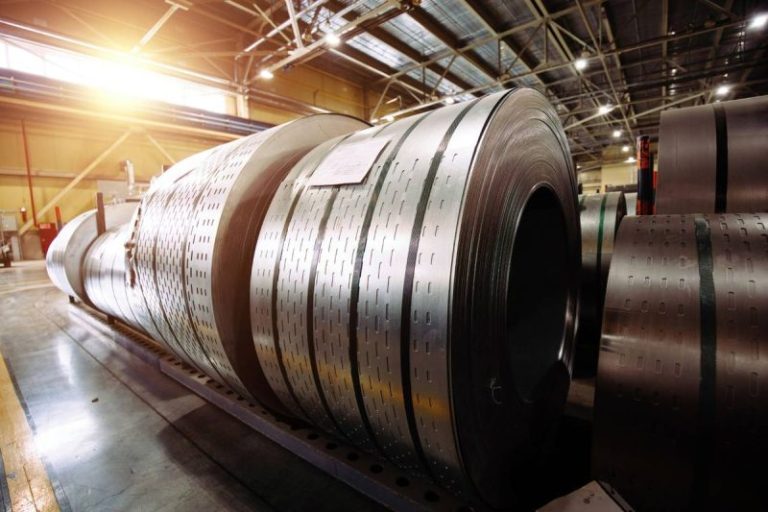
Securities Disclosure: I, Giann Liguid, hold no direct investment interest in any company mentioned in this article.
This post appeared first on investingnews.com