
Archive

December 2025

Browsing

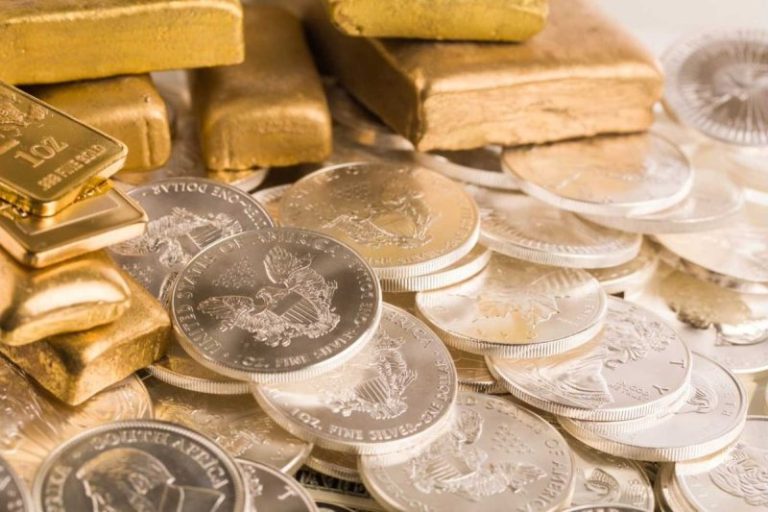
Craig Hemke, publisher of TFMetalsReport.com, shares his thoughts on the gold and silver markets heading into 2026, outlining why he remains bullish.

‘Just keep adding some — it’s your protection against the madness. It’ll get you through the storm,’ he said. ‘It preserves your net worth from the destruction of these bankers and politicians.’

Securities Disclosure: I, Charlotte McLeod, hold no direct investment interest in any company mentioned in this article.

This post appeared first on investingnews.com

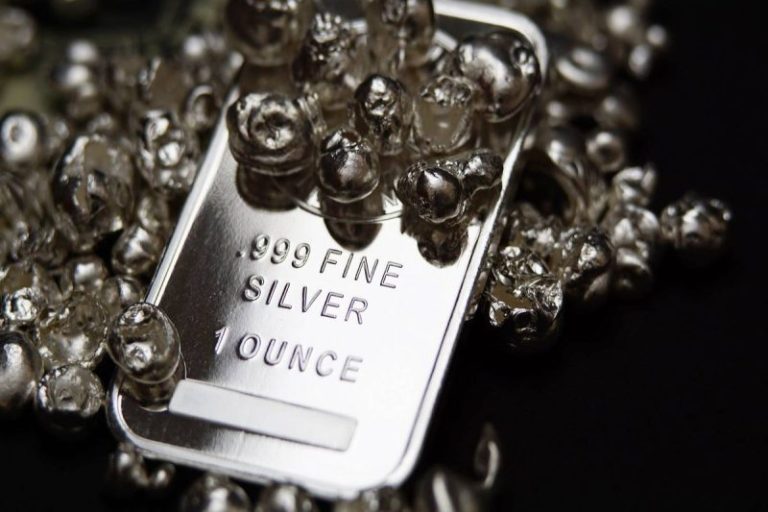
Altius Minerals (TSX:ALS,OTCQX:ATUSF) is making a bet on a lithium market recovery, agreeing to acquire Lithium Royalty (TSX:LIRC) in a C$520 million deal that will expand its exposure to battery metals.

Under a definitive agreement announced by the two companies on Monday (December 22), Altius plans to purchase all of the issued common and convertible common shares of Lithium Royalty for C$9.50 each.

The amount will be paid as either C$9.50 in cash or 0.24 of a common Altius share, according to shareholders’ election.

For Altius, the acquisition will allow it to bring a portfolio of 37 lithium royalties into its fold. None of them involve streams, and they span projects from production through early exploration.

Four of the royalties are tied to producing assets, three of which were commissioned in 2025 and are currently ramping up or expanding. Another 12 projects are in advanced stages with completed economic studies, while three to five additional assets are targeting startup between 2026 and 2030.

The company said the portfolio is geographically concentrated in lower-risk jurisdictions, with most assets located in Canada, Australia and South America, and diversified across both brine-based and hard-rock lithium production.

At the current spot price, Altius expects the acquired royalties to contribute between US$29 million and US$43.7 million in annual revenue by the end of the decade. Lithium carbonate equivalent prices fell to multi-year lows in 2025, holding below US$9,000 per metric ton for most of the year, even as demand continues to expand beyond electric vehicles.

Altius said global lithium demand is expected to exceed 1.5 million metric tons of lithium carbonate equivalent in 2025, with supply deficits potentially re-emerging as early as 2026 after years of oversupply.

Altius Chief Executive Brian Dalton said lithium has “emerged as a mainstream scale mined commodity,” and described the acquired portfolio as featuring “very long resource lives,” strong cost positioning and low jurisdictional risk.

A special shareholders’ meeting is scheduled to happen no later than March 10, 2026.

If approved, the deal is expected to close in the first quarter of 2026, after which Lithium Royalty shares will be delisted and the company will cease to be a reporting issuer in Canada.

Securities Disclosure: I, Giann Liguid, hold no direct investment interest in any company mentioned in this article.
This post appeared first on investingnews.com

Gold marked a new price milestone on Tuesday (December 23), continuing its record-breaking 2025 run.

The spot price rose as high as US$4,511.83 per ounce, hitting that point at 4:04 p.m. PST.

Gold spot price chart, December 16 to 23, 2025.

The yellow metal’s latest rise caps off what’s been a historic year.

After starting 2025 around US$2,640, gold had risen to the US$3,200 level by April. It stayed within a fairly flat range until the end of August, when it launched higher once again, breaking US$4,300 in mid-October.

Gold took a breather following that move, even falling briefly below US$4,000; however, its retracement was neither as steep nor as long as market watchers expected. It began gaining steam again in mid-November, and took off again in earnest this week, powering higher along with its sister metal silver, which is currently over US$71 per ounce.

Both metals benefit from geopolitical tensions and economic uncertainty, which have been present on a global scale throughout the year. Interest rate cuts from the US Federal Reserve have provided support too, as have expectations of easier monetary policy after Fed Chair Jerome Powell’s term ends next year.

Gold also continues to benefit from strong central bank buying, while silver’s industrial side is attracting attention. Although it is valued as an investment metal, it’s key for technology such as solar panels.

Elsewhere in the precious metals space, platinum rose to a fresh record on Tuesday, reaching US$2,355.83 per ounce. Palladium remains below its top price level, but is elevated at around US$1,895 per ounce.

Securities Disclosure: I, Charlotte McLeod, hold no direct investment interest in any company mentioned in this article.

This post appeared first on investingnews.com

Artificial intelligence (AI) has cemented its role as a key sector for investors, but its path forward is shifting.

Several catalysts, including sustained AI infrastructure spending and US Federal Reserve interest rate cuts, are poised to drive tech sector growth in 2026; however, massive capital expenditure digestion by hyperscalers, alongside increasing demands for a return on investment and persistent power supply limitations, are influencing a rotation in focus, with risks like high valuations and policy uncertainty potentially capping AI industry gains.

Overall, experts are calling for the technology sector to navigate a delicate balance between aggressive expansion and necessary financial discipline in 2026, with AI at the heart of these matters.

Capex digestion and AI verticalization

AI capital expenditures by hyperscalers are projected to fuel demand for semiconductors, data centers and related infrastructure in the year head, as per Nicholas Mersch, portfolio manager at Purpose Investments.

According to notes from multiple analysts, the Big Four — Meta Platforms (NASDAQ:META), Microsoft (NASDAQ:MSFT), Alphabet (NASDAQ:GOOGL) and Amazon (NASDAQ:AMZN) — are slated to spend over US$300 billion on AI infrastructure. Mersch cited forecasts that see hyperscaler capex hitting roughly US$600 billion in 2026.

“Over the next 12 to 24 months, the narrative likely shifts from who can build fastest to who can drive the highest revenue and margin per dollar of AI infrastructure,’ Mersch added. “This is where verticalization matters. The companies that can capture the full stack, from silicon to applications, look like they will win.’

His top pick in this arena is Google, followed by Microsoft.

While the cloud layer remains a high-stakes game of concentration among a few platforms, Mersch said the hardware layer underneath is beginning to fragment as the chip stack quietly diversifies.

“Large multi-year AI chip deals are broadening the market beyond NVIDIA (NASDAQ:NVDA), with Advanced Micro Devices (NASDAQ:AMD) and custom application-specific integrated circuit (ASIC) programs winning meaningful share. High-bandwidth memory (HBM) has become the real bottleneck and profit pool, with tri-sourced HBM3E, an emerging HBM4 race and surging HBM demand from ASICs,’ the expert said.

‘The result is a more plural, multi-vendor accelerator ecosystem. Looking out to the second half of the decade, total AI silicon spend can keep growing even if individual GPU vendors see more competition and pricing pressure, with memory, packaging and custom silicon capturing a larger share of the economics.’

Chip diversification, however, is now colliding with HBM and packaging shortages, constraining output from 2026 to 2027. BMI’s Cedric Chehab notes that rapid capex growth is outpacing supply, ruling out near-term oversupply, but warns of volatility if data center investments fail to deliver profitability amid persistent infrastructure shortages.

Power as a binding constraint for AI

Power limits are a specter looming above AI expansion heading into 2026.

“Individual campuses are pushing past 1 gigawatt, utilities in key regions are scrambling to add generation and transmission and Big Tech is signing multi-gigawatt nuclear and long-term power deals, including restarts of previously shuttered plants,” explained Mersch. US data center demand is now poised to triple by 2030, thrusting utilities, nuclear operators and grid infrastructure into prime investment orbits.

“Even Google has acknowledged that serving capacity needs to double roughly every six months,” he added.

Alphabet, the parent company of Google, and other hyperscalers became active infrastructure developers in 2025, inking high-profile strategic deals designed to secure 24/7 — and carbon-free — energy for AI data centers.

Google’s deal with Elementl Power in May to provide capital to develop three advanced nuclear sites in the US represents a shift toward nuclear energy that is perhaps the most significant structural change in the AI landscape today, further extending the verticalization narrative into the power grid itself.

The shift toward energy-backed AI is being institutionalized at the highest levels of finance. In late 2025, JPMorgan Chase (NYSE:JPM) launched its US$1.5 trillion Security and Resiliency Initiative, a decade-long plan specifically targeting the intersection of AI, grid infrastructure and nuclear energy.

By earmarking US$10 billion in direct equity for US firms, the initiative effectively underwrites the full-stack transition.

Are AI stocks in a bubble?

The path for AI is moving from building technology to proving its value. While many experts remain optimistic, the transition from deployment to execution introduces new risks that could define the industry’s next winners and losers.

As organizations fully embed AI into their core workflows, the operational stakes are shifting. Infrastructure strategies are diversifying as security-conscious businesses seek more control over their high-value AI workloads.

Simultaneously, the rise of agentic AI, which automates full workflows, combined with cost and complexity issues on major hyperscalers, will lead to a trend of cloud repatriation toward regional and bare-metal platforms.

Despite concerns over a potential bubble, the industry will continue to receive massive institutional backing. B2BROKER’s John Murillo rejects the idea of an AI bubble, comparing OpenAI to Edison’s plants amid giants’ resilience.

‘In the case of dot-coms, everyone was investing just to invest; it didn’t matter what exactly to choose and some of the projects didn’t have a solid foundation. With AI, it’s not like this. The technology proves its worthiness every day, and it has already swept away many junior analysts,’ Murillo emphasized.

Nevertheless, high AI valuations risk corrections if adoption disappoints or energy constraints emerge.

The success of the current capex cycle will depend on whether these investments translate into measurable operating leverage and cost savings through the back half of the decade.

“The bubble scenario is very unlikely,” Murillo added. “I think in the current economic situation, there are problems much worse than a potential bubble.”

For example, geopolitical tensions, sticky inflation and US midterm elections could spark volatility, prompting sector rotations away from overvalued mega caps.

Investor takeaway

The investment focus in AI is shifting from the initial narrative to tangible execution and quantifiable profitability. While the challenges of elevated valuations and geopolitical instability persist, some experts dismiss comparisons to a technology bubble, arguing the sector’s demonstrated value offers a stable underpinning.

Future leaders in the AI industry will be distinguished by their capacity to convert infrastructure spending into significant operating leverage and cost efficiencies.

Securities Disclosure: I, Meagen Seatter, hold no direct investment interest in any company mentioned in this article.
This post appeared first on investingnews.com

Nickel prices were stagnant in 2025, trading around US$15,000 per metric ton (MT) for much of the year.

The metal’s primary price motivation stemmed from persistent oversupply from Indonesian operations.

Overall, sentiment remained weak amid soft demand growth from the construction and manufacturing sectors, and declining interest in nickel as electric vehicle (EV) battery makers began to eye cheaper chemistries.

Nickel supply in 2026

The big question going into the new year is if nickel supply and demand will come into balance.

The most significant contributing factor over the last several years has been an abundance of supply from Indonesia, which has become the world’s top nickel producer.

The US Geological Survey estimates that full-year 2024 nickel production came in at 2.2 million MT, a staggering increase over the 800,000 MT it believes the nation produced in 2019.

In February 2025, the Indonesian government changed its quota system, effectively increasing nickel ore output to 298.5 million wet metric tons (WMT) from 271 million WMT in 2024. At the time, it said the increased production capacity was being limited to major production areas and was designed to reduce supply pressures.

The increase helped drive the amount of nickel sitting in exchange warehouses. Stockpiles at the London Metal Exchange (LME) had risen to 254,364 MT by the end of November, up from 164,028 MT at the start of 2025.

Meanwhile, the nickel price sank to US$14,295, toward the lower end of profitability for low-cost Indonesian miners.

The profitability question has raised the possibility of cuts — according to Shanghai Metal Market, the Indonesian government is proposing to cut nickel ore output to around 250 million MT in 2026. If the reduction comes to pass, it would mark a significant decline from the 379 million WMT laid out by Indonesia in 2025. Discussions on the final amount are ongoing, and the outlet states that it will be some time before the target is finalized.

“The global market is still forecast to remain in surplus — around 261,000 MT in 2026 — so further cuts would need to be significant to alter fundamentals,” she explained.

Additionally, there could be a wait-and-see approach as other new policies adopted by the Indonesian government in 2025 begin to take hold. The first, introduced in April, saw a shift from a flat 10 percent royalty to a more dynamic rate of 14 to 18 percent, depending on nickel prices. The second came in October, when the government cut the validity period of mining licenses from three years to one, providing the government greater oversight of production levels.

These prices, however, aren’t supportive of western producers, which began curtailing operations in 2024 when the LME average price was US$16,812 and reached US$21,000 in May of that year.

For her part, Manthy suggested that to get back to that range, there needs to be a more coordinated approach to constraining supply, and it may not make an immediate difference.

“To push prices to that range, cuts would need to be deep enough to erase most of the projected surplus. Given the scale — hundreds of thousands of MT — this seems unlikely without coordinated action. Even then, investor sentiment would probably require sustained prices above US$20,000 to materially improve producer attractiveness,” she said.

Nickel demand in 2026

The challenges faced by nickel go beyond oversupply; demand growth for the base metal is also soft.

Nickel’s primary use case is in the production of stainless steel, much of it destined for the Chinese housing market, which has yet to recover from its collapse in 2020.

While the Chinese government tried to stabilize the market in 2024 and earlier in 2025, it has done little to reverse the downward trend. According to a CNBC report on December 2, November sales were down 36 percent from the same period in 2024, and declined 19 percent through the first 11 months of the year.

“China’s property sector weakness has weighed on stainless steel demand, which accounts for over 60 percent of global nickel consumption. Even with broader economic growth, this stagnation has kept nickel prices subdued. A property turnaround would help, but given the surplus outlook, price upside would likely be limited,” Manthey said.

Adding to nickel’s woes is soft growth from the EV market.

Much of the increase in nickel production over the last five years was to fuel the need for EV batteries, but more recently producers like Contemporary Amperex Technology (SZSE:300750,HKEX:3750), one of the world’s largest battery makers, have shifted chemistry to lithium-iron-phosphate (LFP).

Nickel-manganese-cobalt batteries had been seen as superior due to their higher energy density and longer range. But recent advances in LFP technology have erased that gap, with vehicles using the chemistry achieving ranges of over 750 kilometers. Additionally, LFP batteries are cheaper to produce and less volatile, making them safer.

According to a December 1 Reuters article, nickel battery demand rose 1 percent year-on-year in September, while LFP battery demand increased 7 percent. However, the news outlet notes that most of the nickel demand was likely driven more by a rapidly growing EV market than by the benefits of its chemistry.

Although Reuters also notes that nickel chemistry remains the dominant battery technology in western EV markets, that too comes with a caveat, especially in the US, where the elimination of the EV tax credit in September has cratered EV demand. While US EV sales reached a record 1.2 million through the first nine months of 2025, much of that was driven by consumers seeking to take advantage of the US$7,500 credit before it expired.

Early data from Cox Automotive analysis indicates that American EV sales are down 46 percent in Q4 from the third quarter, and 37 percent from the same period last year.

Against that backdrop, Ford Motor (NASDAQ:F) has scaled back its EV plans, taking a US$19.5 billion writedown, and will pivot to extended-range EVs — which use gas-powered engines to augment range — and hybrid cars. Similarly, in mid-December, the EU dropped its plans to ban the sale of all internal combustion engine light vehicles by 2035.

These policy changes likely aren’t good news for nickel watchers.

“Any slowdown in energy transition policies adds to bearish sentiment for battery metals, including nickel,” Manthey said.

Nickel price forecast for 2026

Manthey suggested that nickel prices will remain under pressure throughout 2026.

“We expect prices to struggle to hold above US$16,000 given the surplus. Upside risks hinge on unexpected supply disruptions or stronger-than-forecast stainless and battery demand, but sustained levels above US$19,000 look unlikely under current fundamentals. We see prices averaging US$15,250 in 2026,” she said.

That’s in line with the World Bank’s 2026 nickel price outlook of US$15,500, rising to US$16,000 in 2027.

The primary reason for these projections is the ongoing nickel market surplus.

While it didn’t make a price prediction, Russia’s Nornickel, one of the world’s largest nickel producers, suggests that the market will see a surplus of 275,000 MT of refined nickel in 2026.

Low prices will be a challenge for nickel producers and investors alike. Until there is a shift in market fundamentals, a rebound for nickel doesn’t appear to be in the cards in the short or even medium term.

Securities Disclosure: I, Dean Belder, hold no direct investment interest in any company mentioned in this article.

This post appeared first on investingnews.com

(TheNewswire)


Vancouver, B.C. TheNewswire – December 22, 2025 Armory Mining Corp. (CSE: ARMY) (OTC: RMRYF) (FRA: 2JS) (the ‘Company’ or ‘Armory’) a resource exploration company focused on the discovery and development of minerals critical to the energy, security and defense sectors, is pleased to announce it has engaged Castello Q Exploration Corp to carry out an initial phase one work program at its 100% owned Ammo Antimony-Gold project, located in Nova Scotia, Canada.


Ammo is 3,092-hectare exploration package that completely surrounds and is contiguous to the historical West Gore antimony-gold mine.  West Gore produced both antimony and gold in the years leading up to World War I.  The ground has since changed hands multiple times, and is currently held by Military Metals Corp.


West Gore was a significant producer during World War One, with production shipped to England.  Records document nearly 32,000 metric tons of production between 1914-1917, yielding over 7,000 metric tons of antimony concentrate grading 46%.
Total gold recovered up to 1917 was 6,861 ounces. Limited work was conducted in the 1950s, 1960s, and 1980s by several companies along with the Nova Scotia government*.


‘We have established budgets for the phase one exploration program at Ammo and are happy to begin working with Castello Q Exploration,’ said Alex Klenman, CEO. ‘This initial program will provide geologically important data that will contribute significantly to drill targeting. We’re excited that meaningful exploration work is on the horizon and eager to move the project forward in a positive way,’ continued Mr. Klenman.


Click Image To View Full Size


Figure 1: Map showing Armory’s Ammo Project surrounding the historical West Gore antimony-gold mine


The initial work program is expected to consist of data compilation, prospecting and reconnaissance, to identify favorable geology, followed by detailed surface sampling and geophysics to assist in determining priority drill targets. The Company plans to budget up to $656,000 CDN for the initial phase of exploration.  


* Source: NI 43-101 Technical Report, Battery Metals Corp, Mark S. King, P. Geo., Michael C. Corey, P. Geo., May 25, 2021

Note: The Company considers historical data at West Gore to be relevant. Readers are cautioned that the Company has not independently verified the information, and notes that the mineralization on this property may not be indicative of the mineralization on the Company’s property.


About Armory Mining Corp

Armory Mining Corp. is a Canadian exploration company focused on minerals critical to the energy, security and defense sectors. The Company controls an 80% interest in the Candela II lithium brine project located in the Incahuasi Salar, Salta Province, Argentina. In addition, the Company controls 100% interest in both the Ammo antimony-gold project located in Nova Scotia and the Riley Creek antimony-gold project located in British Columbia.


Qualified Person


Harrison Cookenboo, Ph.D., P. Geo., an independent Qualified Person as defined by National Instrument 43-101 Standards of Disclosure for Mineral Projects, has reviewed and approved the technical contents of this news release.


Contact Information


Alex Klenman

CEO & Director

alex@armorymining.com


Neither the Canadian Securities Exchange nor its Market Regulator (as the term is defined in the policies of the Canadian Securities Exchange) accepts responsibility for the adequacy of accuracy of this news release.   This news release does not constitute an offer to sell or a solicitation of an offer to buy nor shall there be any sale of any of the Company’s securities in any jurisdiction in which such offer, solicitation or sale would be unlawful, including any of the securities in the United States of America. The Company’s securities have not been and will not be registered under the United States Securities Act of 1933, as amended (the ‘1933 Act’) or any state securities laws and may not be offered or sold within the United States or to, or for account or benefit of, U.S. Persons (as defined in Regulation S under the  1933 Act) unless registered under the  1933 Act  and applicable  state  securities  laws, or an exemption from such registration requirements is available.


Forward-looking statements:

This press release contains certain forward-looking statements, including statements regarding the intended use of funds. The words ‘expects,’ ‘anticipates,’ ‘believes,’ ‘intends,’ ‘plans,’ ‘will,’ ‘may,’ and similar expressions are intended to identify forward-looking statements. Although the Company believes that its expectations as reflected in these forward-looking statements are reasonable, such statements involve risks and uncertainties. Actual results may differ materially from those expressed or implied in these statements due to various factors, including, but not limited to, political and regulatory risks in Canada, operational and exploration risks, market conditions, and the availability of financing. Readers are cautioned not to place undue reliance on forward-looking statements, which are made as of the date of this release. The Company undertakes no obligation to publicly update or revise any forward-looking statements, whether as a result of new information, future events, or otherwise, except as required by applicable securities laws.

Copyright (c) 2025 TheNewswire – All rights reserved.

News Provided by TheNewsWire via QuoteMedia

This post appeared first on investingnews.com

International Lithium Corp. (TSXV: ILC,OTC:ILHMF) (OTCQB: ILHMF) (FSE: IAH) (the ‘Company’ or ‘ILC’) will hold its 2025 Annual General Meeting today, December 22, at 9.30 a.m. Pacific Time. At that meeting, John Wisbey, Chairman and CEO, will make the following statement:

‘Good morning, and welcome to the 2025 Annual General Meeting of International Lithium Corp. (‘ILC’ or the ‘Company’). I would like to share a few comments on the year-to-date and the outlook ahead before proceeding with formalities.

‘In summary, 2025 has been a successful year for ILC, improved further by a major turnround in the lithium market from June onwards. The Company completed the sale of its Avalonia property in Ireland, and made a major advance in Southern Africa through obtaining an option to acquire an 80% interest in the company owning the important Karibib project in Namibia. It is important to note that ILC has become much more than a lithium company, and the expansion into other critical minerals will be especially notable if ILC exercises its option in Namibia. As well as lithium, the Karibib project contains the largest declared rubidium resource in Africa, and also enough cesium that, when refined, would meet a year of global demand. Rubidium and cesium are both valuable critical metals with multiple commercial uses.

‘The year for the lithium market has been one of two halves. In H1 2025, the lithium price, and that of related minerals such as spodumene, continued to be very weak, reaching a low in June of circa 10% of the 2023 highs. This, combined with the resultant impact on share prices, was painful for every company in the lithium sector, including ILC. However, in H2 2025, the position has seen a considerable improvement.

‘While much of the commodity market’s focus has been on gold, silver and platinum, the rebound in lithium prices has not been widely reported and has been largely overlooked. Yet in H2 2025, the spodumene price has risen by more than 100%, outperforming all precious metals. Most of that gain has come in Q4 2025. The main benchmark lithium carbonate price Li2CO3 has risen by around 65% from its June 2025 lows. If this trend continues, it will be very positive for the lithium sector.

‘The Company’s flagship Raleigh Lake project in Ontario, Canada is again, at today’s prices for spodumene, an economically viable project even if ILC were to focus solely on lithium. Moreover, it also carries a significant rubidium resource, and one of ILC’s goals in 2026 is to put a formal economic value on that rubidium resource, as we did in the PEA for lithium two years ago.

‘In September 2025, ILC announced that it had acquired an option to buy Lepidico’s 100% interest in Lepidico Mauritius for C$975,000. This brings with it an 80% interest in the Namibian company that owns 100% of the Karibib Lithium, Rubidium and Cesium project. As announced at the time, this is a major project that has received substantial investment and, indeed, reached the Definitive Feasibility Study stage under JORC in 2020. If the option is exercised, ILC will have a major stake in the largest declared rubidium resource in Africa and one of the largest in the world. There is also enough cesium at Karibib that, when refined, could meet a year of world demand. We are still waiting for the outcome of an arbitration case that Lepidico is engaged in and will decide whether or not to exercise the option shortly after receiving that result.

Lepidico’s 80% ownership of Karibib resulted from its 2019 acquisition of TSXV-listed Desert Lion Energy in exchange for shares and other securities valued at that time at AUD$ 22.9 million (approximately CAD$20.7 million). Since acquiring the company in 2019, Lepidico invested a further AUD$ 12.1 million (approximately CAD$ 10.9 million) in the Karibib project, excluding central group overheads, with a significant portion directed towards drilling, an environmental study and subsequently a Definitive Feasibility Study and a further Resource Estimate.

This project could become highly important to ILC in 2026, and the Company’s Southern Africa strategy will hopefully also be supplemented by progress on the announced Zimbabwe EPO applications.

‘The Company completed the sale of the Avalonia project in Ireland to a subsidiary of its partner, Ganfeng Lithium, whereby ILC also retains a 2% Net Smelter Royalty. The total of C$2.5m generated from this was used to advance the investment in the Namibian project and other ongoing initiatives.

Outlook

‘The good work done in 2025, and the upturn in the lithium market, gives a strong possibility of 2026 being a successful period for ILC. As well as extra work at the flagship Raleigh Lake project in Canada, if ILC exercises its option to buy Lepidico Mauritius, it will, at Karibib in Namibia, have a project that could otherwise have taken several years and tens of millions of dollars to bring a similar greenfield project to the same stage, let alone the time to identify such a project. Karibib would bring ILC not only lithium, but also a world-class resource in rubidium and one of the larger cesium deposits not controlled by a Chinese company.

‘Lithium and spodumene prices are now back up to the level where mine development is economically viable at Canadian prices. If their rise continues, this will be positive for ILC and the lithium industry overall. ILC’s additional focus on rubidium and cesium gives further strings to its bow that could turn ILC into a much larger company.

‘In closing, I would like to take this opportunity to wish all of our valued shareholders, advisors and other stakeholders a Merry Christmas and a happy, healthy and prosperous New Year.’

On behalf of the Company,

John Wisbey
Chairman and CEO
www.internationallithium.ca

For further information concerning this news release, please contact +1 604-449-6520 or info@internationallithium.ca or ILC@yellowjerseypr.com.

_______________________________________________________________________________________

Neither TSX Venture Exchange nor its Regulation Services Provider (as that term is defined in the policies of the TSX Venture Exchange) accepts responsibility for the adequacy or accuracy of this release.

Cautionary Statement Regarding Forward-Looking Information

Except for statements of historical fact, this news release or other releases contain certain ‘forward-looking information’ within the meaning of applicable securities law. Forward-looking information or forward-looking statements in this or other news releases may include: the timing of completion of any offering and the amount to be raised, the likelihood or otherwise of the Company exercising its option on Lepidico Mauritius, the outcome of arbitration involving Lepidico Namibia, the effect of results of anticipated production rates, the timing and/or anticipated results of drilling on the Karibib or Raleigh Lake or Firesteel or Wolf Ridge projects, the expectation of resource estimates, preliminary economic assessments, feasibility studies, lithium or rubidium or copper recoveries, modeling of capital and operating costs, results of studies utilizing various technologies at the company’s projects, the Company’s budgeted expenditures, future plans for expansion in Southern Africa and planned exploration work on its projects, increased value of shareholder investments in the Company, the potential from the Company’s third party earn-out or royalty arrangements, the future demand for lithium, rubidium, cesium and copper, and assumptions about ethical behaviour by our joint venture partners or third party operators of projects or royalty partners. Such forward-looking information is based on assumptions and subject to a variety of risks and uncertainties, including but not limited to those discussed in the sections entitled ‘Risks’ and ‘Forward-Looking Statements’ in the interim and annual Management’s Discussion and Analysis which are available at www.sedarplus.ca. While management believes that the assumptions made are reasonable, there can be no assurance that forward-looking statements will prove to be accurate. Should one or more of the risks, uncertainties or other factors materialize, or should underlying assumptions prove incorrect, actual results may vary materially from those described in forward-looking information. Forward-looking information herein, and all subsequent written and oral forward-looking information are based on expectations, estimates and opinions of management on the dates they are made that, while considered reasonable by the Company as of the time of such statements, are subject to significant business, economic, legislative, and competitive uncertainties and contingencies. These estimates and assumptions may prove to be incorrect and are expressly qualified in their entirety by this cautionary statement. Except as required by law, the Company assumes no obligation to update forward-looking information should circumstances or management’s estimates or opinions change.

To view the source version of this press release, please visit https://www.newsfilecorp.com/release/278761

News Provided by Newsfile via QuoteMedia

This post appeared first on investingnews.com

The silver price was on the rise once again this week — it surged past the US$67 per ounce level on Friday (December 19), hitting a new record before pulling back.

As for gold, it spent much of the period around the US$4,330 per ounce level, although it rose as high as US$4,360 on Thursday (December 18), approaching its own all-time high.

Investors were eyeing November US consumer price index (CPI) data, which came out on Thursday. It was up 2.7 percent year-on-year, while core CPI was measured at 2.6 percent.

Those figures were quite a bit lower than analysts’ estimates, and data collection issues caused by the US government shutdown have left market participants questioning the results.

Notably, Bureau of Labor Statistics officials had to make ‘certain methodological assumptions’ because the October CPI report was canceled entirely. The bureau also started November data collection later than usual, driving concerns about a rebound in numbers for December.

US jobs data for both October and November came out this week as well, showing that the unemployment rate for last month rose to 4.6 percent, the highest since 2021.

While 64,000 jobs were added in November, 105,000 were lost in October, and revisions took 33,000 jobs away from the months of August and September.

Outside US economic data, it’s worth noting that for silver there’s still a lot of focus on behind-the-scenes actions that could be impacting the price.

Here’s what Substack newsletter writer John Rubino had to say about that:

‘A lot of the discontinuities that we’re seeing in the silver market right now are due to the fact that the big exchanges like Comex may not have enough silver to satisfy the demands of futures contract holders.

‘In other words, there are a lot more people out there with long futures contracts that could come in and demand silver than there is silver to satisfy that demand. And the number of people who are standing for delivery on futures contracts is rising, and the amount of silver in these exchanges is shrinking.’

Bullet briefing — Platinum beats gold, copper hits new record

Platinum price on the move

I’d be remiss if I didn’t also take a moment to mention platinum.

While gold and silver have been making headlines, platinum’s 2025 rise has been quiet, but significant — it’s up over 100 percent year-to-date and nearly hit US$1,980 per ounce this week.

Platinum is somewhat similar to silver in that they both have precious and industrial sides, and they’ve both seen persistent deficits in recent years.

Platinum’s deficit has definitely helped it rise this year, but looking forward to next year the World Platinum Investment Council is expecting a balanced market. When I saw that, I wondered if that would mean lower prices in 2026. But that may not necessarily be the case.

Edward Sterck said there are a couple of nuances in the council’s outlook — for example, it’s anticipating profit taking from exchange-traded funds, but if that doesn’t happen, then the platinum deficit may persist. He also noted that balance in 2026 wouldn’t erase years of deficits:

‘A balanced market doesn’t solve for the fact we’ve had three years of deficits. It doesn’t in any way, I suppose, rebuild aboveground stocks. And it’s the shortage of aboveground stocks that seems to be one of the major catalysts behind this price action and behind the market tightness.’

Copper price hits new high

It’s not only precious metals that have been hitting new highs this year.

The price of copper has been climbing as well, hitting a new all-time high of close to US$12,000 per metric ton last week on the London Metal Exchange.

It’s pulled back slightly since then, but market watchers agree the copper outlook remains strong as rising demand meets constrained supply. In fact, I’ve been asking experts what they think the top-performing asset of next year will be, and copper has been a popular pick.

Lobo Tiggre of IndependentSpeculator.com chose the base metal as his highest-confidence trade of 2025, and he said he’s sticking with it next year.

Here’s what he had to say about copper:

‘Top pick for 2026 is copper. Similar reasons to 2025 —the copper price has been kicked around, up and down by what I think of as sort of extraneous issues. But the fundamentals mean the demand scenario just looks phenomenal, and the supply has been really constrained.’

Securities Disclosure: I, Charlotte McLeod, hold no direct investment interest in any company mentioned in this article.

This post appeared first on investingnews.com

We also break down next week’s catalysts to watch to help you prepare for the week ahead.

In this article:

    This week’s tech sector performance

    US stocks advanced this week amid key economic data releases, with tech leading gains after Micron Technology’s (NASDAQ:MU) results release and easing artificial intelligence (AI) sector pressures.

    The S&P 500 (INDEXSP:.INX) rose 0.02 percent on the week, closing Friday (December 19) at 6,834.5.

    However, tech stock losses earlier in the week kept gains in check. The Nasdaq Composite (INDEXNASDAQ:.IXIC) lost 0.1 percent for the week to close at 23,307.62 on Friday.

    3 tech stocks moving markets this week

    1. Micron Technology (NASDAQ:MU)

    Micron Technology reported earnings for its first fiscal quarter of 2026 on Thursday (December 18), showing strong results driven by surging high-bandwidth memory sales for AI data centers

    Revenue reached US$13.64 billion, up 93 percent from last year and higher than the company’s September revenue projection of US$12.8 billion. Adjusted earnings per share were US$4.78, beating estimates of US$3.95. The company generated strong free cashflow and declared a US$0.115 per share dividend payable on January 14, 2026.

    Looking ahead, Micron adjusted its profit guidance for the upcoming quarter to US$8.42 per share, higher than Wall Street’s US$4.78 consensus, due to continued AI boom momentum.

    Investors responded to the results by sending Micron shares up 10 percent post-earnings. Momentum carried into Friday’s trading session, spilling over into other tech stocks, which have come under pressure in recent weeks over lofty valuations and funding concerns. The company ended the week 0.58 percent higher.

    2. Trump Media & Technology Group (NASDAQ:DJT)

    Trump Media & Technology Group rose nearly 30 percent before Thursday’s opening bell after the company announced plans to merge with fusion power company TAE Technologies.

    The all-stock deal is reportedly valued at more than US$6 billion. Devin Nunes, chair and chief executive of Trump Media, and Dr. Michl Binderbauer, CEO and director at TAE, are set to serve as co-CEOs.

    TAE is a private company with backing from Alphabet (NASDAQ:GOOGL) and other companies. The merger is slated to create one of the first publicly traded nuclear fusion companies. “We’re taking a big step forward toward a revolutionary technology that will cement America’s global energy dominance for generations,“ Nunes said.

    Shares of Trump Media closed the week with a gain of 39.53 percent.

    3. Oracle (NYSE:ORCL)

    Oracle shares dropped 5.4 percent on Wednesday (December 17) after a Financial Times report claimed data center investor Blue Owl Capital pulled out of a US$10 billion financing round for one of the AI data centers Oracle is constructing for OpenAI in Michigan. Talks reportedly stalled due to concerns over project delays, tougher debt terms, Oracle’s rising debt load and lease arrangements, per sources cited by the news outlet.

    Oracle disputed the report’s implications, stating that Michigan negotiations are “on schedule” without Blue Owl.

    The company said its project development partner, Related Digital, has chosen “the best equity partner from a competitive group of options, which in this instance was not Blue Owl.” Still, the company finished the week with its share price ahead by 2.18 percent as tech stocks staged an end-of-year comeback.

    Oracle, Micron Technology and Trump Media performance, December 15 to 19, 2025.

    Chart via Google Finance.

    Top tech news of the week

                Tech ETF performance

                Tech exchange-traded funds (ETFs) track baskets of major tech stocks, meaning their performance helps investors gauge the overall performance of the niches they cover.

                This week, the iShares Semiconductor ETF (NASDAQ:SOXX) declined by 0.94 percent, while the Invesco PHLX Semiconductor ETF (NASDAQ:SOXQ) saw a loss of 0.66 percent.

                The VanEck Semiconductor ETF (NASDAQ:SMH) also decreased by 0.61 percent.

                Tech news to watch next week

                Markets will be closed mid-week next week, with low trading volumes likely keeping movement calm.

                Watch for year-end selling in tech stocks, a potential rotation into safer sectors and light data like factory orders and home sales reports. Any comments on future interest rates could move markets somehwat, but expect mostly flat trading unless big news like policy changes breaks through.

                Securities Disclosure: I, Meagen Seatter, hold no direct investment interest in any company mentioned in this article.

                This post appeared first on investingnews.com